September 5, 2026
327 Miles: A Long Look at the 2026 Tesla Model Y in Our Fleet
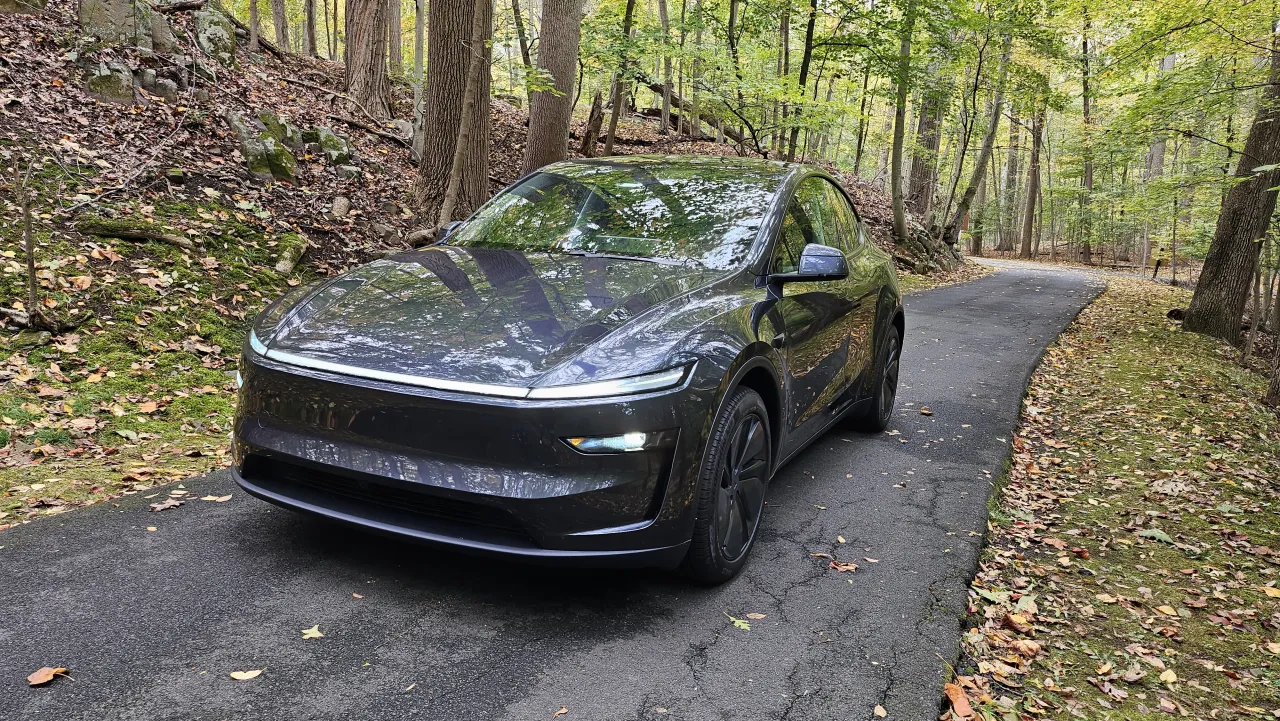
The Tesla Model Y has spent several years being one of the most-argued-about vehicles on the road and, simultaneously, one of the most bought. Both of those things are usually true of the same car for the same reason: it is genuinely different enough to be worth arguing about, and genuinely good enough that a lot of people stop arguing and just buy one.
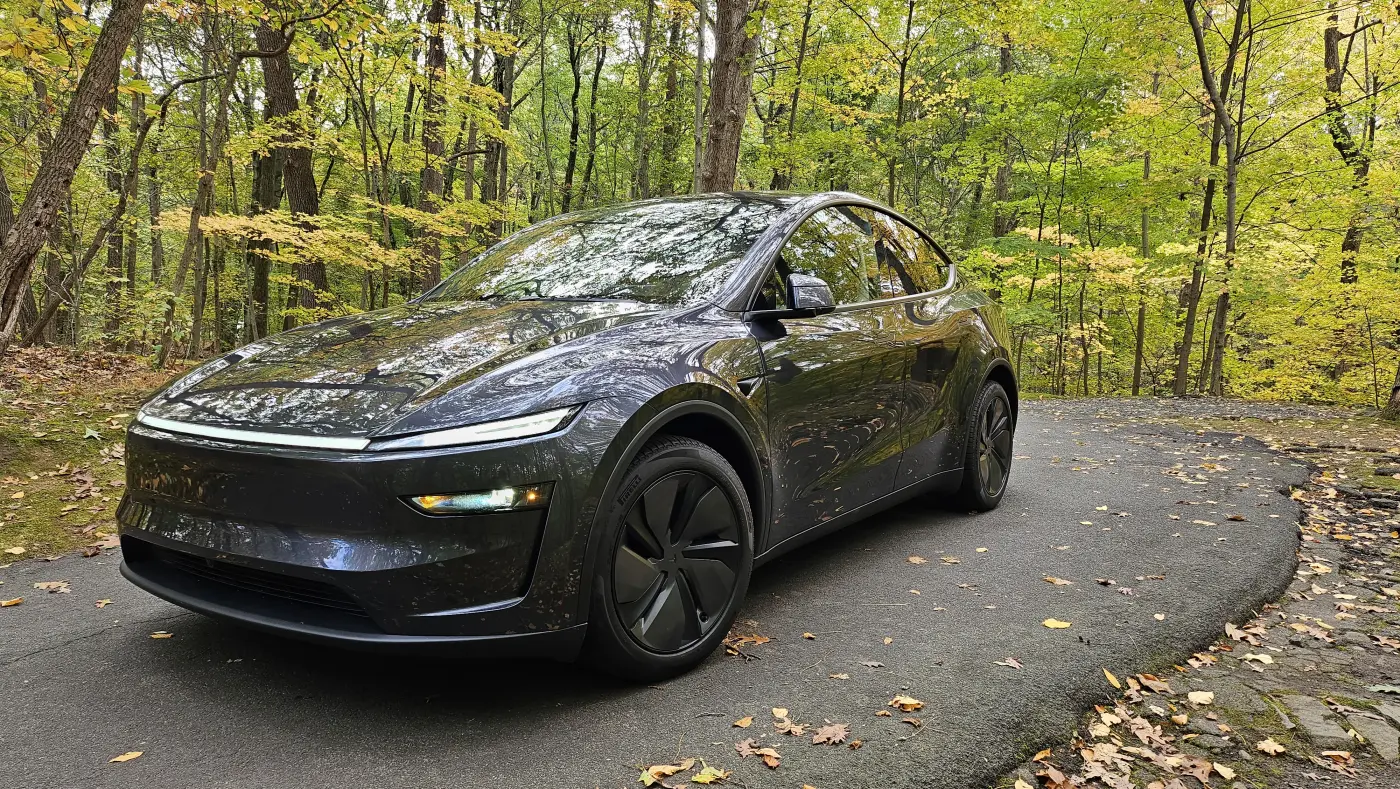
We rent one. Specifically, a 2026 Tesla Model Y Long Range All-Wheel Drive, which is the version of this car that we think makes the most sense for the way people actually use a rental in North Jersey. This is not a review written from a press launch. It is what we have learned running one as a rental vehicle, plus every number we could verify from the EPA and the Insurance Institute for Highway Safety, so you know what you are getting before you book it.
What's in this article
- What 327 miles actually means from Bergen County
- The running-cost math, and why it is the real story
- Charging, and the thing people get wrong about it
- The 2026 redesign and a Top Safety Pick+
- What it is like to actually drive
- Living with the interior
- Autopilot, and what it is not
- Winter, honestly
- Five trips from North Jersey it suits perfectly
- Renting one as your first EV
- The numbers, from the EPA
- What we have learned renting it out
- Questions renters actually ask us
- Model Y or something else in our fleet?
- Book it
What 327 Miles Actually Means From Bergen County
The EPA rates the 2026 Model Y Long Range All-Wheel Drive at 327 miles of range on a full charge. Range figures are the most quoted and least understood number in the entire electric vehicle conversation, so it is worth translating that into geography rather than leaving it as a statistic.
From our base in Bergen County, 327 miles is Boston with about a hundred miles still in hand when you arrive. It is Washington D.C. one way with a comfortable margin. It is a Jersey Shore round trip with room to spare, or Lake George and the southern Adirondacks. It is every conceivable version of a weekend in the Catskills, the Poconos, the Berkshires or the Hudson Valley — there and back — without ever thinking about a charger at all.
Put more bluntly: for the overwhelming majority of trips people actually take out of North Jersey, this vehicle does not need to be charged during the trip. You leave full, you do the thing, you come back. The charging conversation only begins somewhere past the Mason-Dixon line or halfway up New England, and even then it is one stop.
We will be honest about the caveat, because everybody who has driven an EV in a real Northeast winter knows it. Cold weather costs range. So does driving 80 miles an hour, running the heat hard, carrying five people and their luggage, and climbing mountains. A rated 327 miles in February with the heat on is not 327 miles. It is comfortably enough for the trips described above, and it is not the number on the sticker. Anyone who tells you otherwise is selling something.
The Running-Cost Math, and Why It Is the Real Story
Range gets the attention. Running cost is the number that changes behaviour.
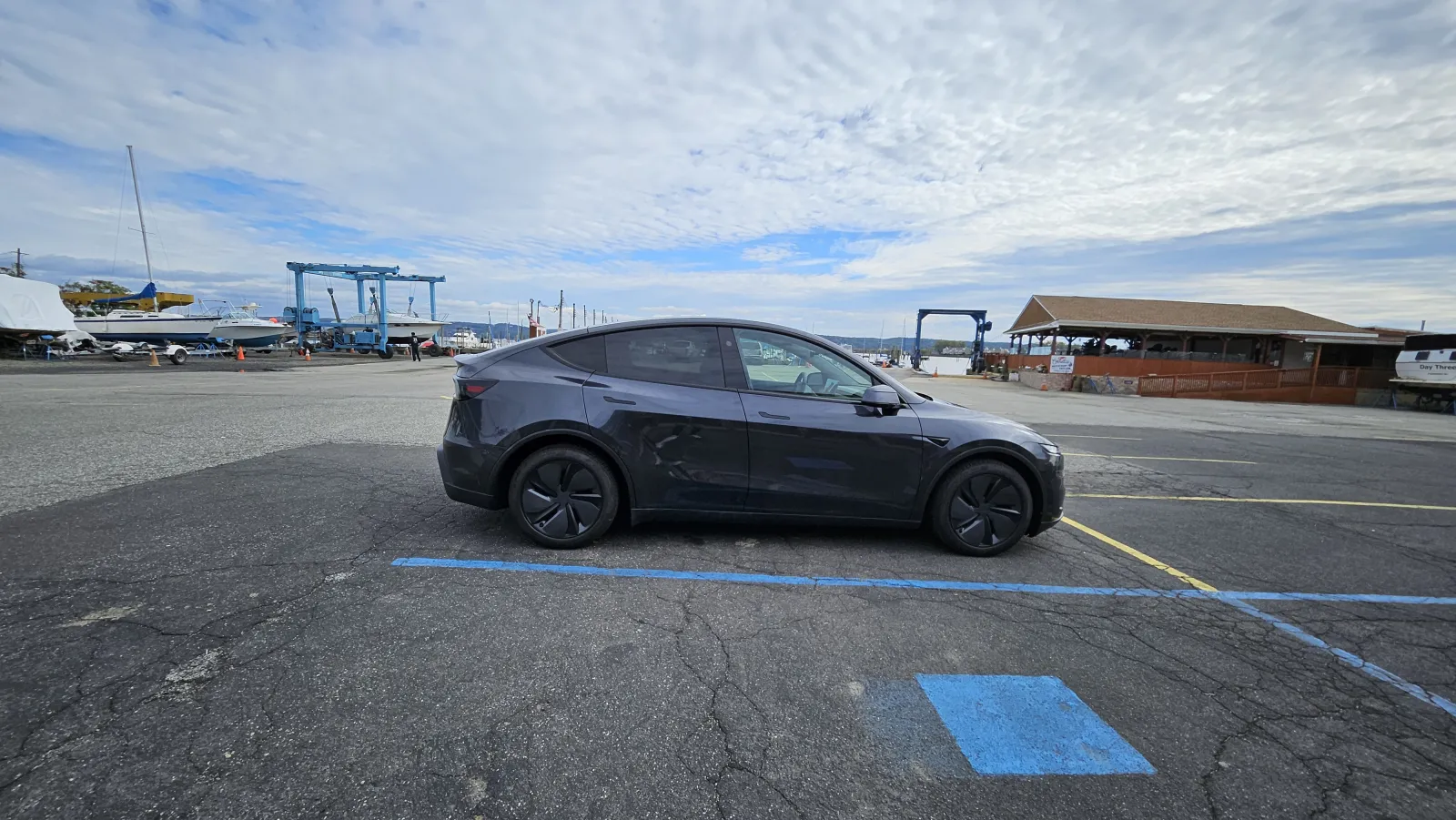
The EPA rates this Model Y at 123 MPGe combined — 130 city and 115 highway — consuming 27 kWh per 100 miles. Against the EPA's standard assumption of 15,000 miles a year, that works out to an estimated annual fuel cost of $600, and an estimated saving of about $8,000 in fuel over five years compared with the average new vehicle.
Sit with the eight thousand dollars for a moment. That is not a rounding error or a rebate you have to apply for. That is the fuel bill difference on an average vehicle over an ownership period, and it is the single strongest argument for the entire category. It is also, incidentally, the reason a rental is such a useful way to test the premise: you can find out in a weekend whether the driving experience justifies the switch, before you commit to a five-year answer.
Notice too which way the city and highway figures run. A gasoline vehicle is at its worst in traffic, idling and stopping and starting, burning fuel while going nowhere. An EV is the opposite — 130 MPGe city against 115 highway — because it uses essentially nothing while stationary and recovers energy every time you slow down. For anyone whose driving involves the Turnpike at rush hour, the George Washington Bridge, or the slow crawl of Route 4 on a Saturday, that inversion is not a footnote. It is the whole point.
Charging, and the Thing People Get Wrong About It
The most common mistake people make about charging an EV is applying gas-station logic to it. At a gas station you arrive nearly empty, fill completely, and leave. That is the correct way to use gasoline and a terrible way to think about electricity.
The EV pattern is topping up, not filling up. You plug in where you already are — at home overnight, at a hotel, at a destination charger while you eat — and you almost never arrive anywhere near empty. The EPA lists a full charge at 8 hours on a 240-volt connection, which sounds slow right up until you notice that you were asleep for all of it. Overnight charging is not a delay. It is the absence of ever visiting a gas station again.
For the road-trip case, Tesla's Supercharger network remains the most significant practical advantage this vehicle has, and it is worth being straightforward about why. It is not that the chargers are faster than everybody else's any more, because they largely are not. It is that they are reliably there, they work, and the car routes you to them automatically with the battery preconditioned on arrival. The reason EV road trips go wrong is almost never charging speed. It is arriving at a charger that is broken, occupied, or does not exist. The Supercharger network is the answer to a reliability problem rather than a speed problem, and reliability is what you want on an unfamiliar route.
Practically, for a renter: we hand the vehicle over charged. For the vast majority of the trips people take it on, that is the entire charging conversation.
The 2026 Redesign and a Top Safety Pick+
The Model Y was redesigned for the 2026 model year, and the redesign has been validated by the organisation whose opinion carries the most weight on the subject. The 2026 Model Y earns a Top Safety Pick+ award from the Insurance Institute for Highway Safety, the IIHS's highest award, on the strength of good ratings across the board.
That distinction matters more than it sounds. IIHS runs two award tiers, and the criteria get tougher most years specifically to stop vehicles from coasting on old results. Top Safety Pick+ is the higher tier and it requires good performance in the updated moderate overlap front test, which evaluates rear-passenger protection — the test that a lot of otherwise strong vehicles have struggled with, and precisely the one that matters if you are putting people in the back seat.
If you are renting a vehicle to drive your family somewhere, that award is the single most useful piece of third-party information available to you, and it is free to look up. We would rather point you at it than tell you the car feels safe.
What It Is Like to Actually Drive
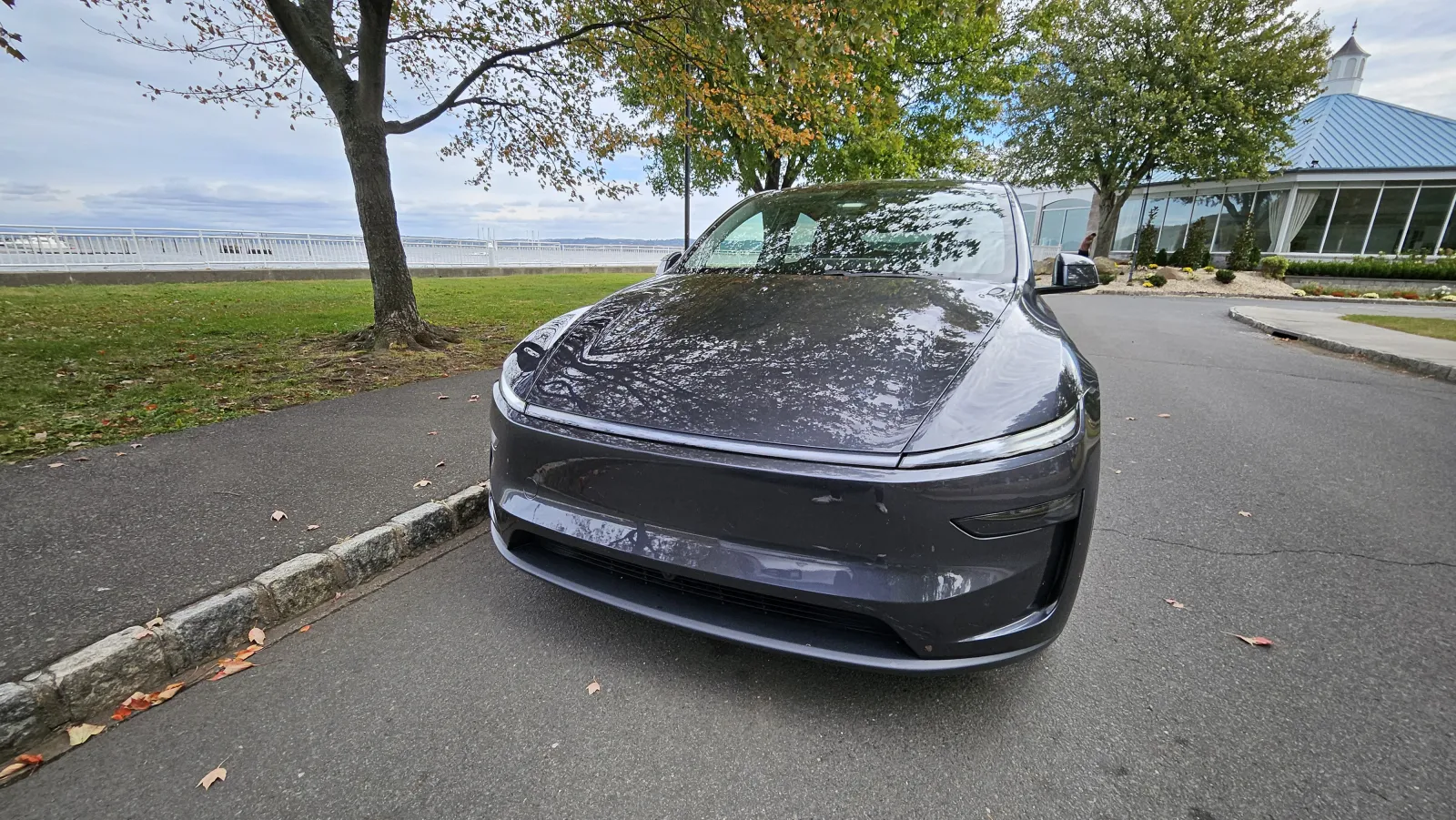
The EPA lists the Long Range All-Wheel Drive's motors at 90 kW at one axle and 200 kW at the other. Tesla does not publish a combined horsepower figure and we are not going to invent one, so here is the experiential version instead.
It is quick in the way that matters on a real road, which is not the 0-to-60 number people quote at parties. It is the 30-to-60 merge onto Route 17 with a truck closing behind you, or the overtake on a two-lane road where you want to be past and back in your lane before you have finished thinking about it. Electric motors deliver their full pull instantly, with no gearbox deciding whether it agrees, and that responsiveness is the single biggest day-one difference for anyone who has never driven an EV.
The dual-motor all-wheel-drive setup deserves its own paragraph for a Northeast audience. Two independent motors, one per axle, adjust torque front to rear thousands of times a second with no mechanical linkage to wait for. On wet leaves in October or a slushy on-ramp in January, that is a real, felt advantage over a mechanical all-wheel-drive system, and it is available every time you touch the accelerator rather than only when something has already started to go wrong.
The other adjustment is one-pedal driving. Lift off the accelerator and the car slows hard, recovering energy back into the battery instead of throwing it away as heat through the brakes. It takes most people about twenty minutes to recalibrate and roughly one day to find it strange going back. In stop-and-go traffic it substantially reduces how tired you are at the end of a drive, because you are making one input instead of constantly moving your foot between two pedals.
Living With the Interior
The Model Y interior is the most polarising thing about the car and the thing most likely to determine whether you love the weekend or spend it mildly irritated. So, plainly: nearly everything runs through the central touchscreen. There is no instrument cluster in front of the driver. There are very few physical buttons.
Our honest read after renting one out repeatedly is that the learning curve is real and short. The first fifteen minutes are genuinely disorienting if every car you have owned had a stalk and a knob for everything. By the end of the first drive most people have stopped noticing. By the second day a fair number are asking why their own car needs so many buttons.
What is unambiguously good: the panoramic glass roof, which makes the cabin feel enormous and is the single most commented-on feature by our renters; the rear seat space, which is genuinely adult-sized rather than nominally so; and the absence of a transmission tunnel, which means the middle rear seat is an actual seat rather than a perch. The seating is five, and five is five real people.
Storage is the quiet advantage of a vehicle with no engine. There is a front trunk where the engine would be in any other car, in addition to the boot, and there is deep covered storage under the rear load floor. That combination is unusually good at the specific job of hiding valuables out of sight when you park somewhere unfamiliar, which on a road trip is worth more than a headline cargo figure.
One point of precision we will not fudge: Tesla does not publish cargo volume in a form we could verify from an official source while writing this, and the EPA's listing leaves both passenger and luggage volume blank. We would rather tell you that than repeat a number from a spec aggregator. If you are packing to a specific dimension, ask us and we will physically measure it before you book.
Autopilot, and What It Is Not
This is the feature people ask about most and understand least, so let us be careful with it, because being casual here is how people get hurt.
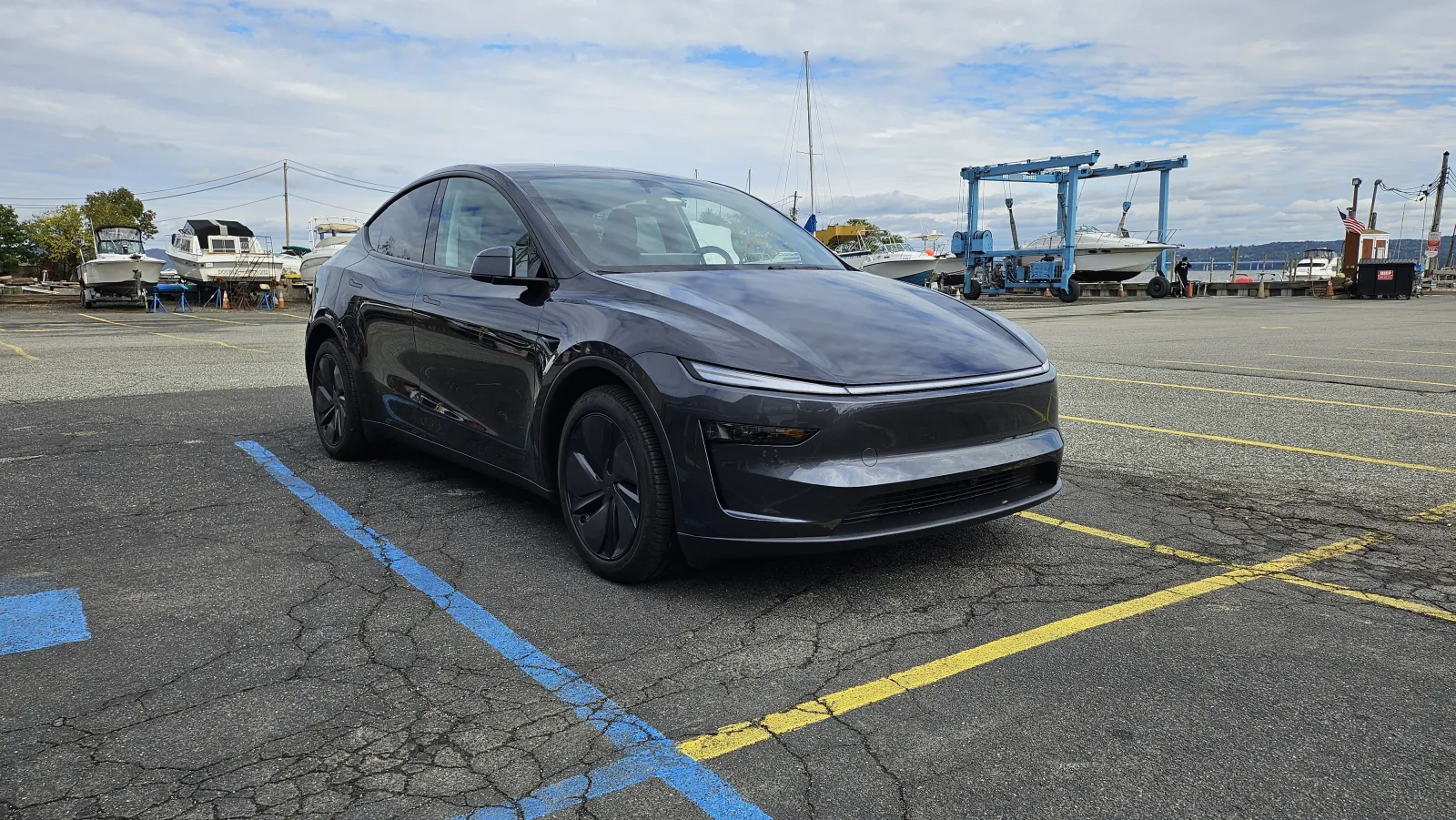
Every Model Y includes Autopilot, which is a driver-assistance system: it can maintain speed, keep distance to the vehicle ahead, and hold the car centred in its lane. Tesla also sells more capable packages, marketed under the Full Self-Driving name, which add further assisted-driving behaviour. Whichever features are active on a given car, the legal and practical situation is identical and it is not complicated: these are supervised systems. The driver is driving. You are responsible for the vehicle at all times, your hands belong on the wheel and your eyes belong on the road. The name of the package does not change that, and neither does how well it happens to be behaving on a particular stretch of highway.
Used within those limits, it is genuinely excellent at one specific job: long, boring, heavy-traffic highway driving. The Turnpike on a Friday afternoon is exactly the environment it was built for, and it meaningfully reduces how worn out you are after two hours of it. It is much less useful on twisting back roads, in heavy rain or snow, or anywhere lane markings are poor — which is to say, it is best precisely where driving is dullest and least useful where driving is hardest.
Because feature packages vary from car to car and change over the air, we will tell you exactly which capabilities are enabled on the specific vehicle at handover rather than promising something here that might not match the car you get. Ask us and we will show you.
Winter, Honestly
We rent in New Jersey, so we get asked about winter constantly and we would rather answer it properly than sell around it.
Cold weather reduces range in every electric vehicle. There are two separate causes and they are worth separating, because only one of them is really a loss. The first is chemistry: a cold battery cannot deliver or accept energy as readily as a warm one, and some of your capacity is genuinely unavailable until it warms up. The second is heating the cabin, which on a freezing morning is a real and continuous draw — unlike a combustion car, which heats the cabin for free with waste engine heat it has to get rid of anyway.
The practical consequences are simple and mostly solved by habit rather than technology. Precondition the car while it is still plugged in, so the energy to warm the battery and the cabin comes from the wall rather than from your range. Use the heated seats in preference to blasting the cabin heat, because warming a person directly costs a fraction of warming all the air around them. Expect a meaningful reduction in winter range and plan the trip around the real number rather than the sticker.
What you get in exchange is the good half of the trade, and it is genuinely good. The car is warm and defrosted before you walk out of the house, which no gasoline car in your driveway can honestly claim. Dual-motor all-wheel drive with instantaneous traction control is excellent in snow and slush. And you never stand at a pump in February.
Five Trips From North Jersey It Suits Perfectly
The Hudson Valley loop. Cold Spring, Beacon, Storm King, Dia. An hour and a half up the east side of the river, a day of walking around, and home. Zero charging considerations, and the glass roof genuinely improves the drive up 9W in the autumn.
The Jersey Shore, repeatedly. Bergen County to Long Beach Island and back is a comfortable round trip with enormous margin. Do it three weekends running and the fuel saving alone is a meaningful number, which is the sort of thing you notice when you are renting rather than owning.
Boston for a weekend. This is the trip that proves the point about range. Roughly 220 miles each way, so you arrive with a real buffer, charge overnight at the hotel like it is a phone, and come home. No planning, no anxiety, no stops you did not want to make anyway.
The Poconos or the Catskills. Ninety minutes to two hours, mountain roads, and all-wheel drive that responds faster than the weather changes. The efficiency inversion works in your favour here too, since a lot of mountain driving is exactly the slow, undulating kind that punishes a gas engine.
Airport runs and city trips. Unglamorous and probably the most common thing our vehicles actually do. Newark, JFK, LaGuardia, or into Manhattan. This is where 130 MPGe in the city stops being a statistic, because sitting in bridge traffic in an EV costs approximately nothing.
Renting One as Your First EV
A large share of the people who book this vehicle are not booking it because they need a car. They are booking it because they are thinking about buying one and have correctly worked out that a weekend of ownership tells you more than a year of reading.
If that is you, here is what we would suggest you actually pay attention to, because it is not the acceleration. Pay attention to what the first morning feels like when you did not go to a gas station. Pay attention to how tired you are after an hour in traffic with one-pedal driving. Pay attention to whether the touchscreen interface has stopped bothering you by day two, because if it has not, it will not in year two either. And pay attention to where you would plug it in at home, because that single question — do you have a driveway, a garage, a parking spot with an outlet — determines more about whether EV ownership works for you than any specification on this page.
That last point is the honest one that dealerships tend to skip. If you can charge where you sleep, an EV is transformative. If you cannot, it is a compromise you need to think carefully about. A rental weekend is a cheap way to find out which of those you are.
The Numbers, From the EPA
| EPA range | 327 miles |
|---|---|
| EPA efficiency | 123 MPGe combined (130 city / 115 highway) |
| Energy consumption | 27 kWh per 100 miles |
| Estimated annual fuel cost | $600 (EPA, 15,000 miles per year) |
| Estimated 5-year fuel saving | About $8,000 versus the average new vehicle |
| Motors | 90 kW and 200 kW AC permanent magnet, dual-motor all-wheel drive |
| Charge time | 8 hours at 240 volts |
| EPA size class | Small Sport Utility Vehicle 4WD |
| Seating | Five |
| IIHS | Top Safety Pick+ (2026) |
What We Have Learned Renting It Out
Owning a car and renting the same car to a hundred different people teach you completely different things about it. Here is what running this one has actually taught us.
The glass roof does more selling than any specification. We could list efficiency figures all day. The thing people photograph, mention in reviews and describe to their friends is sitting under that roof. It changes how big the car feels from the back seat, and it is the reason the rear bench is a pleasant place to be on a long drive rather than merely an acceptable one.
The first ten minutes decide the whole rental. A renter who has the interface explained properly — wipers, lights, mirrors, where the manual door release is, how to open the charge port — has a great weekend. A renter who is handed the keys and left to work it out spends the first hour irritated and never fully recovers. So we do not hand over and walk away. It takes ten minutes and it is the difference between a four-star review and a five.
Almost nobody actually charges it. This surprised us. We assumed charging would be the dominant support question. In practice, for the trips people take out of Bergen County, they leave full and come back with plenty left. The charging conversation happens far more often before the booking than during it, which tells you the anxiety is mostly anticipatory.
People underestimate how much it holds. Because it is a Tesla and reads as sleek, renters routinely assume it will not take their luggage, and then it does — helped considerably by the front trunk, which no one expects and everyone enjoys discovering.
It is the vehicle people book to make a decision. A meaningful share of our Model Y bookings are effectively extended test drives by people deciding whether to buy an EV. We have leaned into that. If that is why you are booking, tell us, and we will set the car up for it and answer the ownership questions honestly — including the ones where the answer is that an EV might not suit you.
Delivery is what people actually value. The single most appreciated thing we do is not a feature of the car at all. It is that the car arrives where the renter is, charged, at the time they asked. For an airport run in particular, that is the entire product.
Questions Renters Actually Ask Us
Do I need to know anything about EVs to rent it? No. We hand it over charged, and for most trips out of North Jersey you will never charge it. If your trip does need a charge, the car finds the charger and routes you there.
How do I open the door? Genuinely the most common question, and not a silly one — the handles are not conventional. We show you in about five seconds at handover. There is also a manual release inside, which we will point out, because you should know where it is before you need it.
Do I have to return it fully charged? Ask us when you book and we will be explicit about the terms for your specific trip rather than burying it in fine print.
Can I take it out of state? Yes. Boston, Washington, upstate New York and Vermont are all routine. Tell us the route when you book and we will sanity-check the charging plan with you for free, because a five-minute conversation beforehand prevents the only kind of problem this vehicle tends to have.
Is it good in snow? Yes, with the caveats in the winter section above. Dual-motor all-wheel drive with electronic torque control is genuinely strong in poor conditions. Tyres still matter more than drivetrain, as they always do.
Will five adults actually fit? Yes. The flat floor means the middle rear seat is usable rather than notional, which is not true of most vehicles this size.
Can you deliver it? Yes, across North Jersey, including airport runs. Tell us where and when.
Model Y or Something Else in Our Fleet?
Versus our 2023 Tesla Model 3. Same software, same charging network, same fundamental driving character. The Model 3 is a sedan, is cheaper to rent, and is rated more efficient still at 132 MPGe combined. The Model Y is taller, easier to get in and out of, has a hatchback rather than a boot lid, and goes considerably further on a charge at 327 miles against 272. If you are carrying bulky things or people who dislike climbing down into a car, take the Y. If you are two people doing city miles, the 3 is the smarter rental.
Versus our 2024 Kia EV9. The EV9 is a much larger three-row vehicle with six seats, far more cargo capacity, a 5,000-pound tow rating and a 1,920-watt power outlet that can run a campsite. It is also less efficient and does not go as far on a charge. If the trip is defined by how much you are bringing, take the EV9. If it is defined by distance, take the Model Y.
Versus our 2022 Kia Telluride. Eight seats and a four-minute refuelling stop anywhere, against five seats and a running cost that is a fraction of it. Big group or unfamiliar territory, take the Telluride. Everything else, take the Model Y.
Book It
The 2026 Model Y Long Range All-Wheel Drive is in our fleet in Bergen County, available for weekends, weeks, airport runs and the long haul north. Rent direct from us,'re protected, with 24/7 roadside assistance. We deliver across North Jersey.
We hand it over charged, we will walk you through the interface before you drive off, and if it is your first EV we will happily spend ten minutes on the charging question rather than letting you work it out on the road.
Reserve the Tesla Model Y
327 EPA-rated miles, all-wheel drive, and a glass roof. Book direct with us.
Book Direct With UsWant to See the Rest of the Fleet?
Three-row SUVs, a second Tesla, and everything else we run out of Bergen County.
View Our Fleet
Written by Frankie
Frankie is Chief Editor & Marketing Director for Frosty Flame Vehicle Rentals.
#nyc #newjersey #nj #VisitNJ #ExploreNJ #NJSpots #ILoveNY #UpstateNY #ExploreNY


Permalink: frostyflame.llc/blog/tesla-model-y-2026-fleet-guide.html