September 3, 2026
The Cheapest Way to Drive 15,000 Miles: Our Tesla Model 3, Examined
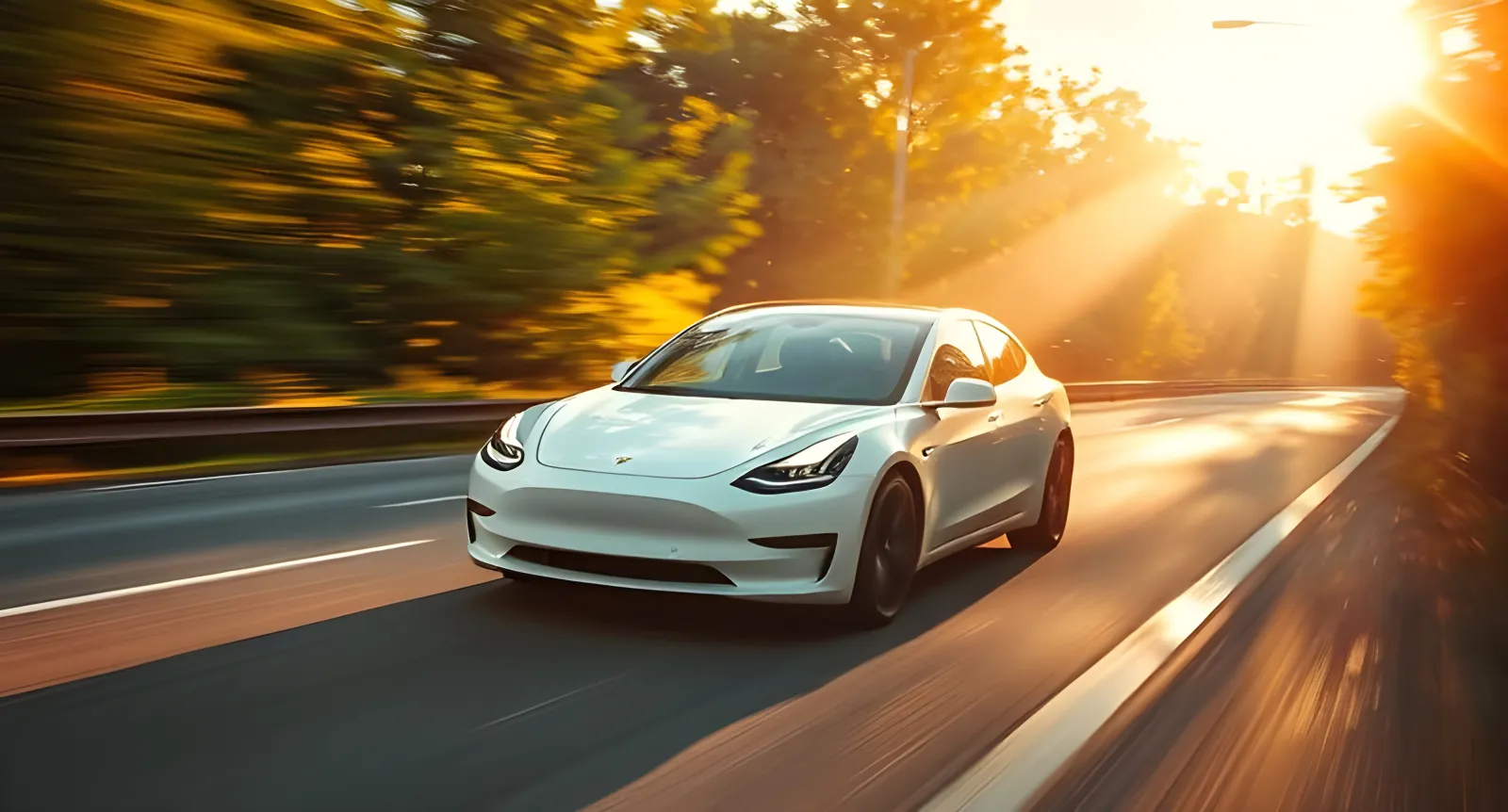
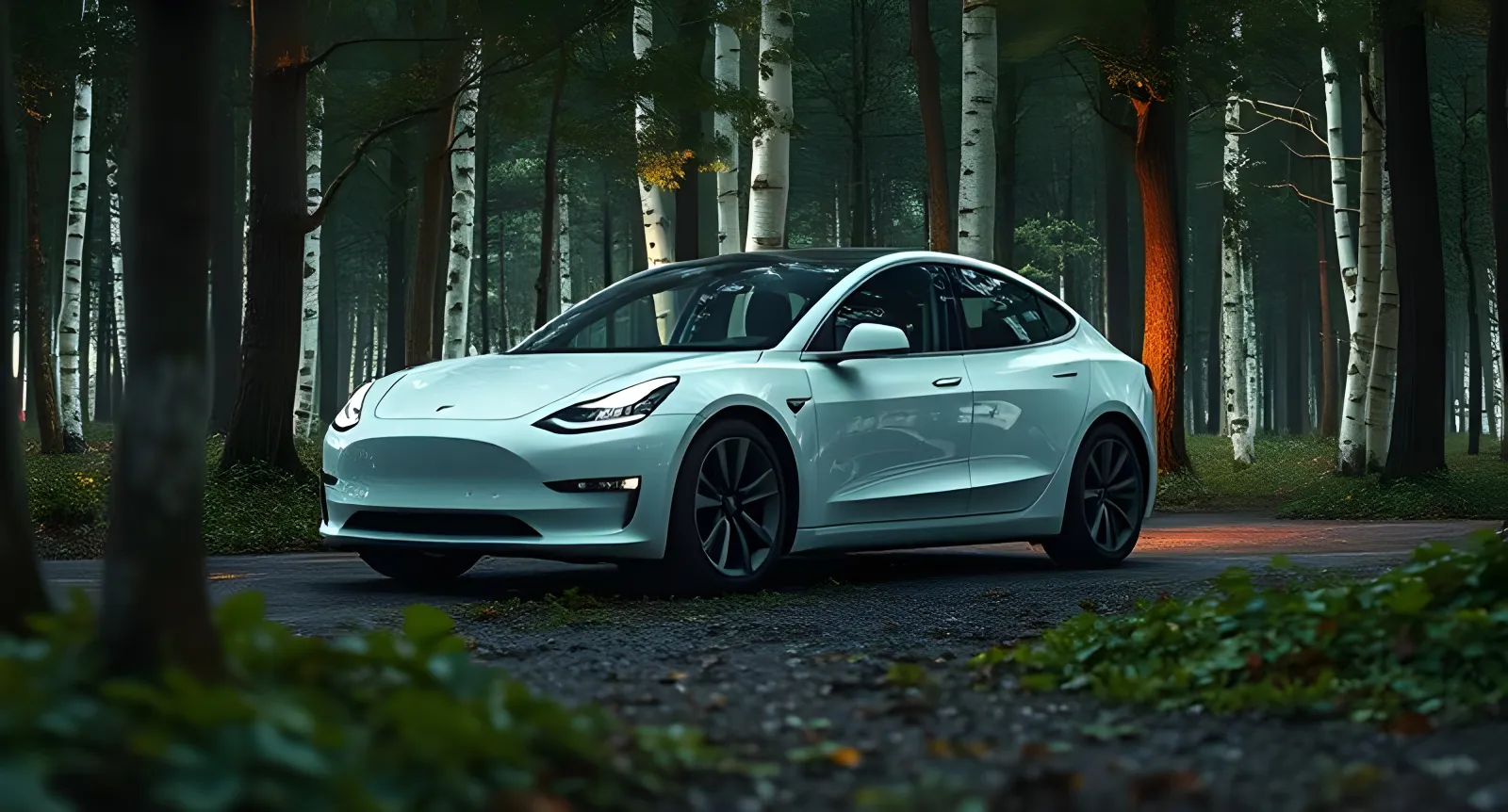
Every fleet has one vehicle that quietly does more work than the exciting ones, and ours is a white 2023 Tesla Model 3 in rear-wheel-drive form. It is not the biggest thing we run, it is not the fastest, and it is not the one that gets photographed at the campsite. It is the one that goes to the airport at six in the morning, does the week in the city, takes somebody to a wedding in Philadelphia, and costs almost nothing to move.
It is also, by a clear margin, the most efficient vehicle in our fleet, and efficiency turns out to be the most underrated thing you can rent. This is a long look at what that actually buys you, with every figure taken from the EPA rather than from a brochure.
What's in this article
- The most efficient thing we rent, and what that means
- Five hundred and fifty dollars a year
- 272 miles, and where that gets you
- Rear-wheel drive: the honest version
- Why it is the best city car we own
- The interior, and the touchscreen question
- Charging it without thinking about it
- Autopilot, and what it is not
- How to actually drive it efficiently
- Six trips out of Bergen County
- One drive in detail: the Palisades
- The best first EV to rent
- Why we rent a 2023 rather than a new one
- The numbers, from the EPA
- Questions renters actually ask us
- Model 3 or something else in our fleet?
- Book it
The Most Efficient Thing We Rent, and What That Means
The EPA rates the 2023 Model 3 rear-wheel drive at 132 MPGe combined — 138 in the city and 126 on the highway — consuming 25 kWh per 100 miles.
Those numbers need translating, because MPGe is an abstraction most people's brains slide off. Here is the version that lands: 25 kWh per 100 miles means it takes about a quarter of a kilowatt-hour to move this car one mile. A kilowatt-hour is roughly what a window air conditioner uses in an hour. You are moving a four-door car carrying five people a mile on a fraction of that.
For comparison inside our own fleet, our Kia EV9 — a far larger, heavier three-row SUV that we like enormously — uses 42 kWh per 100 miles. The Model 3 does the same mile on about sixty percent of the energy. Physics is not negotiable: a smaller, lighter, more slippery car uses less to go the same distance, and the Model 3 is among the most aerodynamically efficient cars on sale.
Note the city figure again, because it is the one that matters around here. 138 MPGe in the city against 126 on the highway. This car is at its most efficient in exactly the conditions that destroy a gasoline car's economy: stop-start traffic, bridge queues, the crawl through Fort Lee at five o'clock. It uses essentially nothing while stationary and it recovers energy every time you brake. If your driving is local and congested, this is the most economically sensible vehicle we can hand you, and it is not close.
Five Hundred and Fifty Dollars a Year
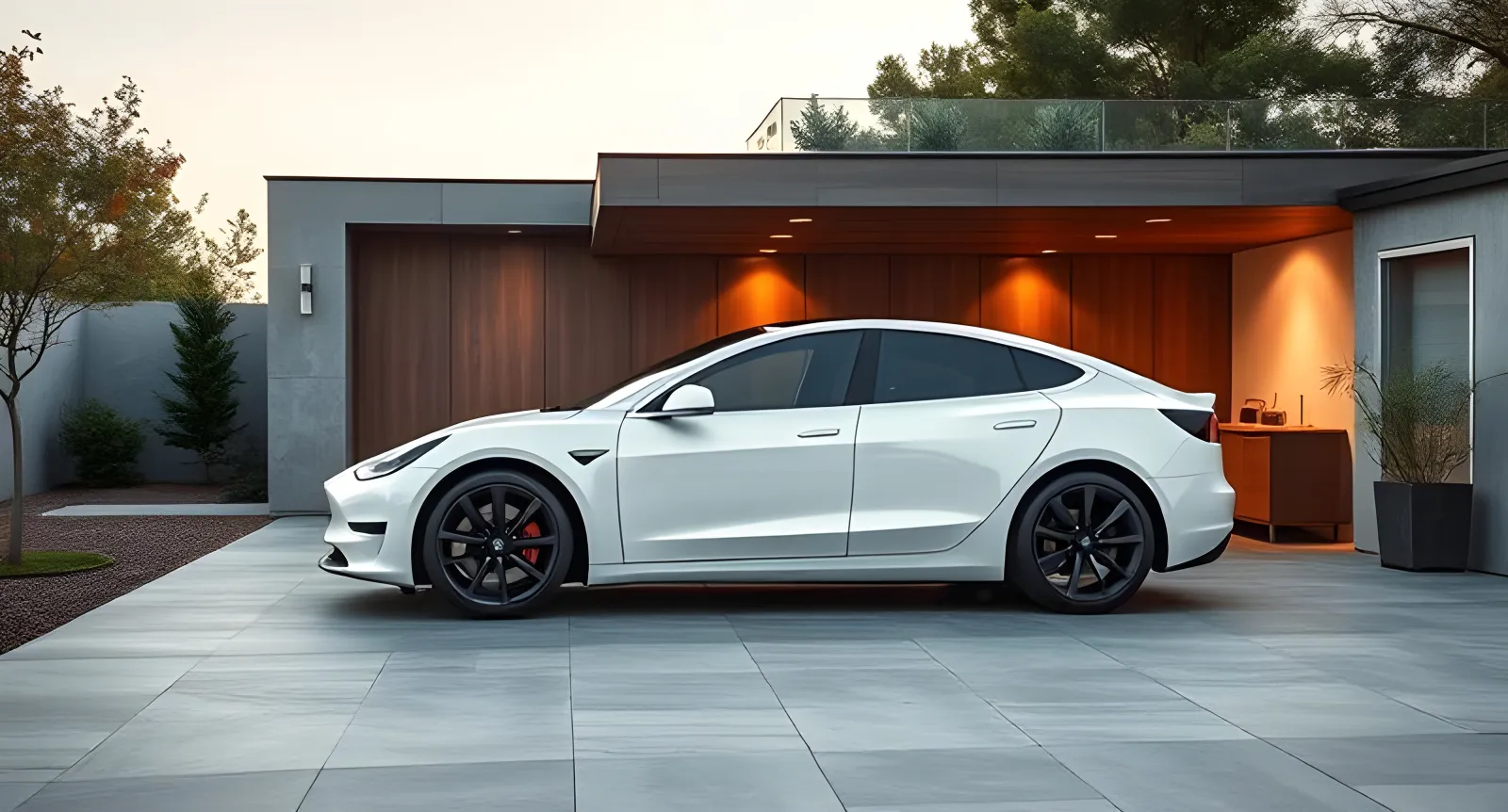
The EPA's estimated annual fuel cost for this car is $550, based on its standard assumption of 15,000 miles a year.
Five hundred and fifty dollars. To drive fifteen thousand miles. That is a number worth reading twice, because it is roughly what a lot of people in North Jersey spend on gasoline in a good quarter, never mind a year. It is under fifty dollars a month. It is less than most phone bills.
We are careful with this figure, so here is the fine print the EPA itself applies. It assumes 15,000 miles a year, a 55/45 city-highway split, and national average electricity prices. New Jersey electricity is not the cheapest in the country, so your real number would be somewhat higher if you owned one. And if you charge exclusively on commercial DC fast chargers rather than at home overnight, the cost per mile rises substantially — fast charging is a convenience product and it is priced like one.
But the shape of the conclusion survives all of that. Even adjusting for expensive Northeast electricity, this car costs a fraction of a comparable gasoline sedan to move. And for a renter the point is sharper still: on a week-long booking with a lot of driving, the fuel difference alone is a meaningful chunk of what you are paying us.
272 Miles, and Where That Gets You
The EPA rates this car at 272 miles of range on a full charge. In geography rather than statistics, from Bergen County that is:
Philadelphia and back, comfortably, without charging. Washington D.C. one way with a healthy margin. A Jersey Shore round trip on a single charge. Boston one way, arriving with something left, then charge overnight at the hotel. The Catskills, the Poconos and the Hudson Valley round trip without thinking about it. Every airport in the region, repeatedly, across a week of local driving.
It is less than the 327 miles of our Model Y, and that difference is real on a long haul. It is also more than enough for the overwhelming majority of what people rent a sedan to do. The honest framing is that 272 miles removes range from the conversation for local and regional trips entirely, and turns a long interstate run into a trip with one planned stop rather than a trip with no stops.
The same seasonal caveat applies here as to any EV, and we would rather state it plainly than let you discover it. Winter costs range. Sustained high-speed highway driving costs range. A fully loaded car with the climate control working hard costs range. Plan around a realistic winter figure, not the sticker, and you will never have a problem.
Rear-Wheel Drive: The Honest Version
Ours is the rear-wheel-drive Model 3, with a single motor driving the back axle — the EPA lists it as a 192 kW AC three-phase unit. That configuration deserves a straight answer rather than a marketing one, because it is the single most common question we get about this car.
The good news first, and it is genuinely good. Rear-wheel drive is why this car is the efficiency champion: one motor rather than two means less weight and less parasitic loss, which is exactly where the 132 MPGe comes from. It also drives beautifully. A rear-driven car with the weight low and centred turns into a corner with a balance that front-wheel-drive cars simply cannot replicate, and on a good road it is the more satisfying car of the two to drive quickly.
Now the caveat, stated properly. In snow and ice, an all-wheel-drive car has an advantage over a rear-wheel-drive one. That is true and we are not going to pretend otherwise. What we will add, because it is equally true and usually left out, is that the gap is far narrower than folklore suggests. Modern traction and stability control on an electric motor is extraordinarily fast — it modulates torque thousands of times a second, long before a human notices anything slipping. And the single biggest determinant of winter grip is not how many wheels are driven. It is tyres. A rear-wheel-drive car on proper winter tyres beats an all-wheel-drive car on worn all-seasons, every time, and it is not a close contest.
Our practical advice: for ordinary North Jersey winter driving, this car is fine and we rent it year-round. If your specific trip is a ski weekend in the Poconos or Vermont with a real chance of unploughed roads, book the Model Y, the EV9 or the Telluride instead, and we will help you switch. We would rather move you to the right vehicle than have you white-knuckle a mountain pass.
Why It Is the Best City Car We Own
People rent SUVs reflexively, and for a trip into Manhattan or around the inner-ring towns it is frequently the wrong call. The Model 3 is the best vehicle we have for city work and here is the specific reasoning.
It is a sedan, so it fits in parking structures with low clearances, in street spots that a three-row SUV cannot use, and through the width restrictions in older garages. It is quiet, which matters more than you would think when you are in traffic for an hour. Its efficiency peaks in exactly the stop-start conditions that define city driving. One-pedal driving removes most of the constant pedal-swapping that makes urban traffic so tiring. And it has no tailpipe, which in a tunnel or a covered garage is a small pleasure you notice immediately.
The rear boot is a boot rather than a hatch, which is the one genuine limitation — large or awkwardly shaped items are easier in the Model Y. But there is also a front trunk where an engine would otherwise sit, and there is deep covered storage under the rear load floor, which is the single best place to leave anything valuable when you are parking on an unfamiliar street. Two separate locked compartments, neither visible through a window, is a real advantage for city parking that almost no one thinks to ask about.
The Interior, and the Touchscreen Question
The Model 3 interior is famously minimal: a single central screen, almost no physical controls, and no instrument display in front of the driver. Some people love it on sight. Some people find it alienating. Very few are indifferent.
Our experience from renting it out is consistent enough to be useful. The first fifteen minutes are the hard part, and after that it largely stops being an issue. The things that trip people up are always the same four: the wipers, the mirrors, the lights, and the glovebox. All four are in the screen, all four are demonstrated in about a minute at handover, and once shown, nobody asks again.
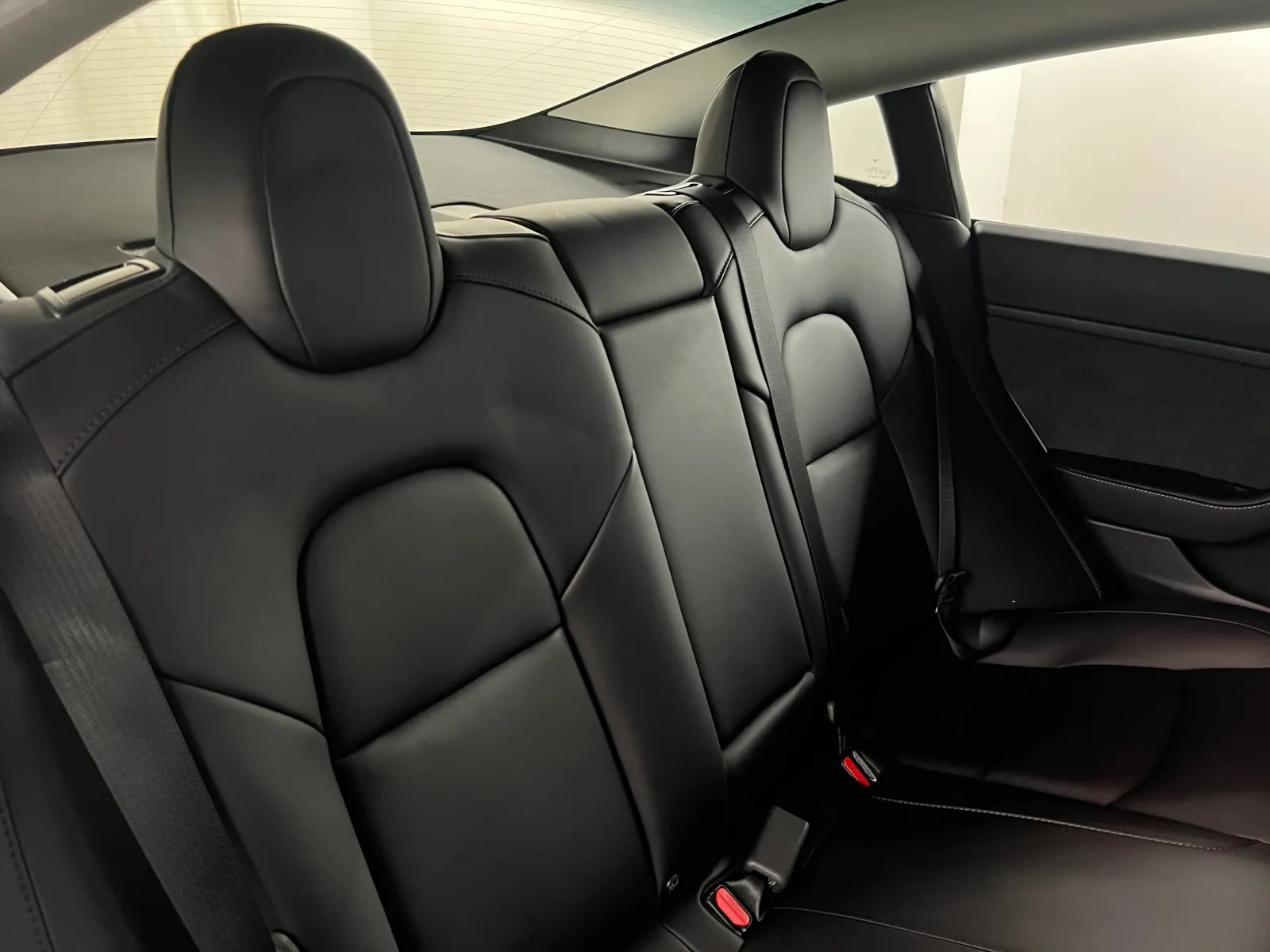
What is genuinely good is the sense of space. Removing the clutter from the dashboard, combined with the glass roof and the flat floor, makes the cabin feel considerably larger than the car's exterior suggests. The rear seat is properly usable for adults, and the absence of a transmission tunnel means three across the back is a real proposition rather than a technicality.
The other thing worth knowing is that the car updates itself. Software arrives over the air, so a 2023 car today is running considerably newer software than it shipped with. That is genuinely unusual in a vehicle and it is why a three-year-old Tesla feels much less like a three-year-old car than a three-year-old anything else does.
Charging It Without Thinking About It
The EPA lists a full charge at 10.4 hours on a 240-volt connection, which is the overnight number. Plug in when you get home, unplug when you leave, never think about it again. That is the ordinary daily pattern and it involves precisely zero effort.
For longer trips, the Supercharger network is the practical advantage. As we say in our Model Y article, the value is not raw speed — other networks are competitive on that now — it is reliability and integration. The car knows where the chargers are, routes you through them automatically, warms the battery on approach so it can accept a fast charge the moment you plug in, and tells you how full you need to get before continuing. The failure mode that ruins EV road trips is a charger that is broken or full, and this is the network least likely to do that to you.
For a renter, none of this is usually relevant, because we hand it over charged and 272 miles covers the trip. But if you are heading further, tell us your route when you book and we will look at the charging plan with you.
Autopilot, and What It Is Not
The same clarity we apply to our Model Y applies here, and it matters too much to soften.
Autopilot is a driver-assistance system. It can hold a speed, keep a distance to the car in front, and centre the car in its lane. Whatever the feature package is called, the driver is driving. Hands on the wheel, eyes on the road, fully responsible for the vehicle at all times. It is a system that reduces fatigue on long highway drives, not one that lets you stop paying attention, and the distinction is not a legal technicality — it is the whole safety case.
Within those limits it is very good at the thing it is for: the Turnpike, the Garden State Parkway, I-95, in heavy traffic, for a long time. It is much less useful on back roads, in heavy weather, or where lane markings are worn. We will show you exactly which features are enabled on the car at handover rather than promising a specific package here.
How to Actually Drive It Efficiently
Renters routinely get ten to fifteen percent more range out of this car than others do on the same route, and the difference is entirely technique. None of it involves driving slowly enough to annoy anybody.
Speed is the dominant variable, and it is not linear. Aerodynamic drag rises with the square of speed, so the energy cost of going faster climbs steeply rather than steadily. The difference between 65 and 80 miles an hour on a long highway run is far larger than the fifteen-mile-an-hour gap suggests, and on a two-hour drive it saves you almost no time at all. If you are watching range on a long trip, this is the single lever that matters and everything else is a rounding error next to it.
Let it coast and regenerate rather than braking late. One-pedal driving recovers energy every time you lift off. Reading the road far enough ahead to lift early, instead of holding speed and then braking hard, puts energy back in the battery that would otherwise become heat in the brake discs. In city traffic this is where a large part of that 138 MPGe city figure actually comes from.
Precondition while plugged in, not after you unplug. On a cold morning, warming the cabin and the battery from the wall costs you nothing in range. Doing the same thing after you have unplugged costs you miles. It is the same amount of energy either way; the only question is whose it is.
Use the heated seats instead of the cabin heat. Warming a person directly takes a small fraction of the energy needed to warm all the air in the car. In winter this is the second-biggest lever after speed.
Do not carry a roof box you do not need. Anything on the roof wrecks the aerodynamics of a car this slippery, and the penalty is much larger in percentage terms than it would be on a boxy SUV. If you need to carry things on the roof, rent the Telluride or the EV9 — they have roof rails and are far less troubled by the drag.
Check the tyre pressures. Unglamorous, free, and worth real miles. We set them before every rental, but on a long trip in changing temperatures it is worth a look.
Six Trips Out of Bergen County
The airport run. Newark, LaGuardia or JFK. The single most common thing this car does. Efficient in traffic, easy to park, and we will deliver it to you.
Philadelphia for the day. About two hours down, easily a round trip on one charge, and the city driving at the far end is where the car is happiest.
The Palisades and the Hudson Valley. Twenty minutes to the Palisades Interstate Parkway and one of the genuinely great drives in the region, especially in October. This is the road that reminds you rear-wheel drive is a driving advantage as well as an efficiency one.
The Jersey Shore. Down the Parkway, boot full, no fuel stop in either direction. Repeat weekly all summer for the price of a couple of restaurant meals.
A week in the city. If you are visiting and need a car for a week of mixed city and suburban driving, this is the cheapest vehicle we can put you in, and the easiest to park.
Washington D.C. The long one. Roughly 230 miles, so it is within range one way with margin, then charge overnight at the hotel and drive home. The trip that proves 272 miles is more than a local number.
One Drive in Detail: The Palisades
If you rent this car and only have a few hours, do this one. It starts about twenty minutes from where the car lives and it is the drive we send people on when they ask what to do with an afternoon.
Pick up the Palisades Interstate Parkway and head north. The road runs along the top of the cliffs on the western bank of the Hudson, and it was deliberately built as a scenic parkway rather than a highway — no trucks, no billboards, gentle sweeping curves, and trees the whole way. It is one of the few genuinely pleasant roads left within half an hour of New York City, and in a quiet electric car with the glass roof overhead it is a different experience from doing it in something loud.
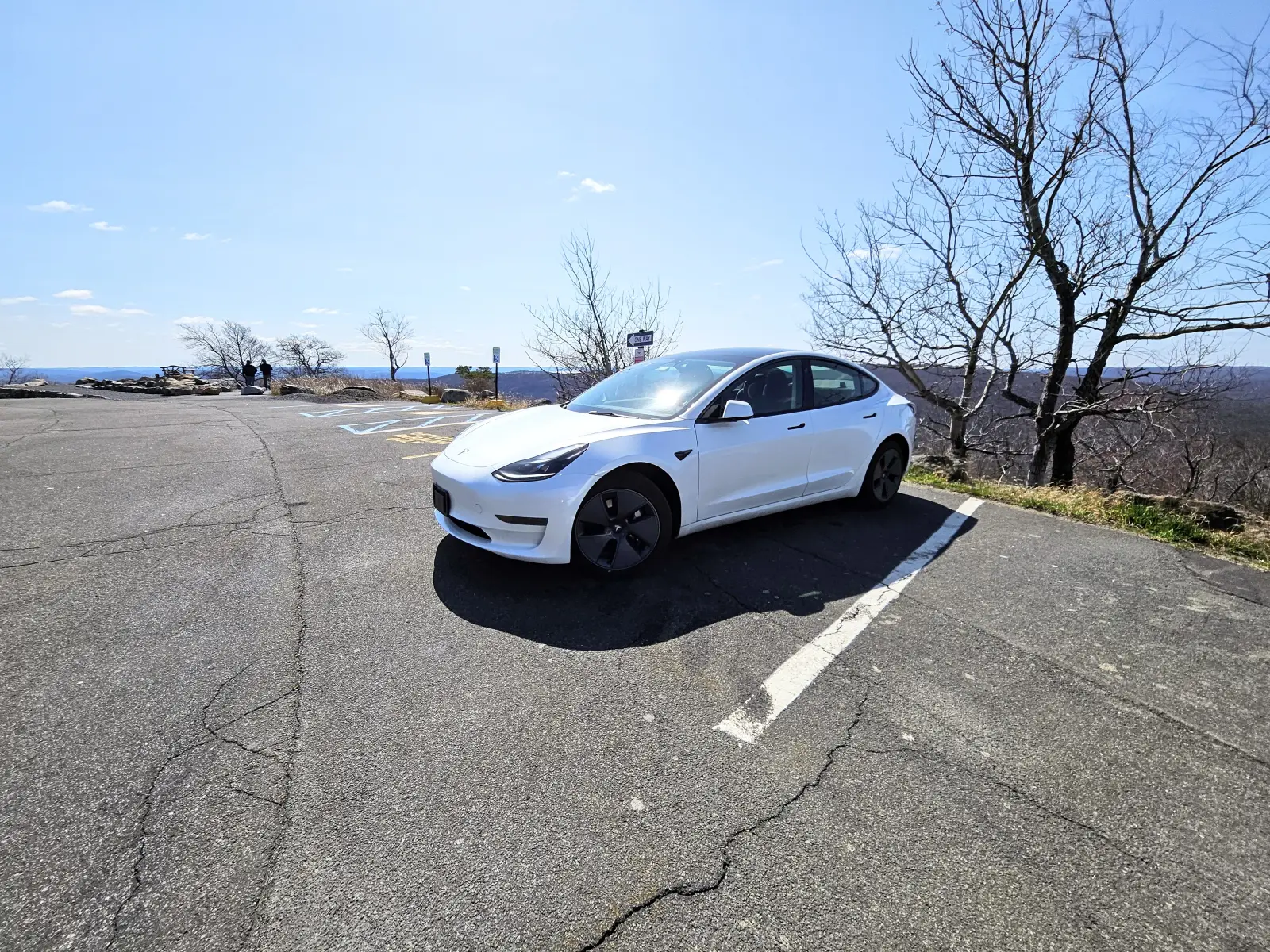
Stop at the State Line Lookout, which sits near the highest point on the New Jersey side of the Palisades and looks straight down the Hudson toward the city. There is a car park, a short walk to the overlook, and trails down the cliff face if you have the time and the shoes. On a clear day the view runs all the way to the George Washington Bridge.
From there you can carry on north into Rockland County and Nyack, which is a small river town with a main street, decent coffee and a reasonable number of places to eat, or turn around and come back down the parkway. Either version is comfortably an afternoon, and the entire round trip barely dents the battery — a fraction of the 272 miles you started with.
Two practical notes. The Palisades Interstate Parkway is a parkway in the legal sense: commercial vehicles are prohibited, which is exactly why it is so pleasant. And the lookout car park fills up on autumn weekends, so go early or go on a weekday if you can, because the foliage traffic in October is genuinely heavy.
The Best First EV to Rent
If you are thinking about buying an electric car and want to test the premise properly, this is the vehicle we would put you in, ahead of the more expensive options in our own fleet. That may sound like odd salesmanship. It is not — it is that this car answers the question most honestly.
The Model 3 is the closest thing to the mainstream EV ownership experience: an ordinary-sized car at an ordinary price doing ordinary journeys. If electric works for you here, it works for you anywhere. If it does not work here, a bigger and more expensive EV was never going to fix it.
The specific things to pay attention to over a weekend: whether not visiting a gas station changes how you feel about the week; whether one-pedal driving leaves you less tired in traffic; whether the minimal interior has stopped bothering you by day two; and above all, where you would plug it in at home. That last question decides more than every specification on this page combined. If you have a driveway or a garage, an EV is transformative. If you are street-parking with no charger, be honest with yourself about it. We would rather you rent ours for a weekend and conclude "not yet" than buy one and regret it.
Why We Rent a 2023 Rather Than a New One
People occasionally ask why the sedan in our fleet is a 2023 when the SUV is a 2026. It is a fair question and the answer says something useful about how electric cars age.
The short version is that this car has not meaningfully aged in the ways that matter to a renter. Because the software arrives over the air, the interface, the navigation, the charging behaviour and the driver-assistance systems on this 2023 are not the ones it left the factory with — they are current. That is genuinely different from a three-year-old conventional car, where the infotainment you get is the infotainment it shipped with, permanently.
Mechanically, there is also just far less to age. An electric drivetrain has no oil to burn, no timing chain to stretch, no exhaust to corrode, no transmission to service, no belts, no spark plugs and no clutch. The brake discs on an EV driven with one-pedal regeneration wear extraordinarily slowly, because most of the slowing down is being done by the motor rather than the pads. The list of things that go wrong on a three-year-old car is mostly a list of things this car does not have.
What does age is the battery, and we will be straightforward about that too. Lithium-ion capacity declines slowly over time and cycles, which is why we quote you the EPA's rated 272 miles as the specification rather than as a promise about this particular car on a particular February morning. In practice the degradation on a well-treated car of this age is modest and it is not something renters notice on the trips they take.
The genuine benefit of running the 2023 is that it lets us rent it for less than the newer cars while delivering an experience that is, in every respect a renter actually touches, the same. That is the whole argument for it, and it is the reason it is the busiest vehicle we own.
The Numbers, From the EPA
| EPA range | 272 miles |
|---|---|
| EPA efficiency | 132 MPGe combined (138 city / 126 highway) |
| Energy consumption | 25 kWh per 100 miles |
| Estimated annual fuel cost | $550 (EPA, 15,000 miles per year) |
| Motor | 192 kW AC three-phase, rear-wheel drive |
| Charge time | 10.4 hours at 240 volts |
| Body | Four-door sedan, five seats |
| Storage | Rear boot, front trunk, and covered under-floor storage |
Questions Renters Actually Ask Us
Is rear-wheel drive a problem in New Jersey? For ordinary conditions, no. For a ski trip with a real chance of snow, book one of our all-wheel-drive vehicles instead and we will help you switch. See the section above for the full answer.
How do I open the doors? The handles are not conventional, inside or out. We show you at handover, including the manual release, which you should know about before you need it.
Will four adults and luggage fit? Yes. It is a boot rather than a hatchback, so very bulky items are better in the Model Y, but for suitcases it is fine — and the front trunk takes a surprising amount.
Do I need to charge it during my rental? For most trips out of North Jersey, no. We hand it over charged.
Can I take it to another state? Yes. Tell us the route and we will sanity-check the charging plan with you.
Can you deliver it? Yes, across North Jersey, including all three major airports.
Model 3 or Something Else in Our Fleet?
Versus our 2026 Tesla Model Y. Same software, same charging network, same character. The Y is taller, has a hatchback, adds all-wheel drive and goes further at 327 miles against 272. The 3 is cheaper to rent, easier to park and more efficient still. Two people doing city and regional miles: take the 3. Bulky loads, snow, or a long haul: take the Y.
Versus our 2024 Kia EV9. Not really a comparison — a five-seat sedan against a six-seat three-row SUV with a tow rating and a 1,920-watt power outlet. Take the EV9 when the trip is about capacity. Take the 3 when it is about cost and ease.
Versus our 2022 Kia Telluride. Eight seats and instant refuelling anywhere, against the lowest running cost in the fleet. Big group, take the Telluride. Two people and a lot of miles, take the 3.
Book It
The Model 3 is based in Bergen County and available for airport runs, city weeks, shore weekends and long regional hauls. Rent direct from us,'re protected, with 24/7 roadside assistance. We deliver across North Jersey.
We hand it over charged and we will spend ten minutes showing you the interface before you drive away, because the difference between a great weekend and an irritating one in this car is entirely in the first ten minutes.
Reserve the Tesla Model 3
272 EPA-rated miles and the lowest running cost in our fleet. Book direct with us.
Book Direct With UsWant to See the Rest of the Fleet?
Three-row SUVs, a bigger Tesla, and everything else we run out of Bergen County.
View Our Fleet
Written by Frankie
Frankie is Chief Editor & Marketing Director for Frosty Flame Vehicle Rentals.
#nyc #newjersey #nj #VisitNJ #ExploreNJ #NJSpots #ILoveNY #UpstateNY #ExploreNY


Permalink: frostyflame.llc/blog/tesla-model-3-fleet-guide.html