July 8, 2026
Three Rows, Zero Drama: Family Road Trips in the Kia Telluride
There is a specific moment on every family road trip when the wheels come off. Not literally — literally would be easier to fix. We mean the moment somewhere around exit 98 when someone's elbow crosses an invisible border, someone else's snack is declared contraband, and a person who is legally an adult announces that they are "not touching, just hovering." Every parent in New Jersey knows this moment. Most of them have negotiated a ceasefire in a rest stop parking lot.
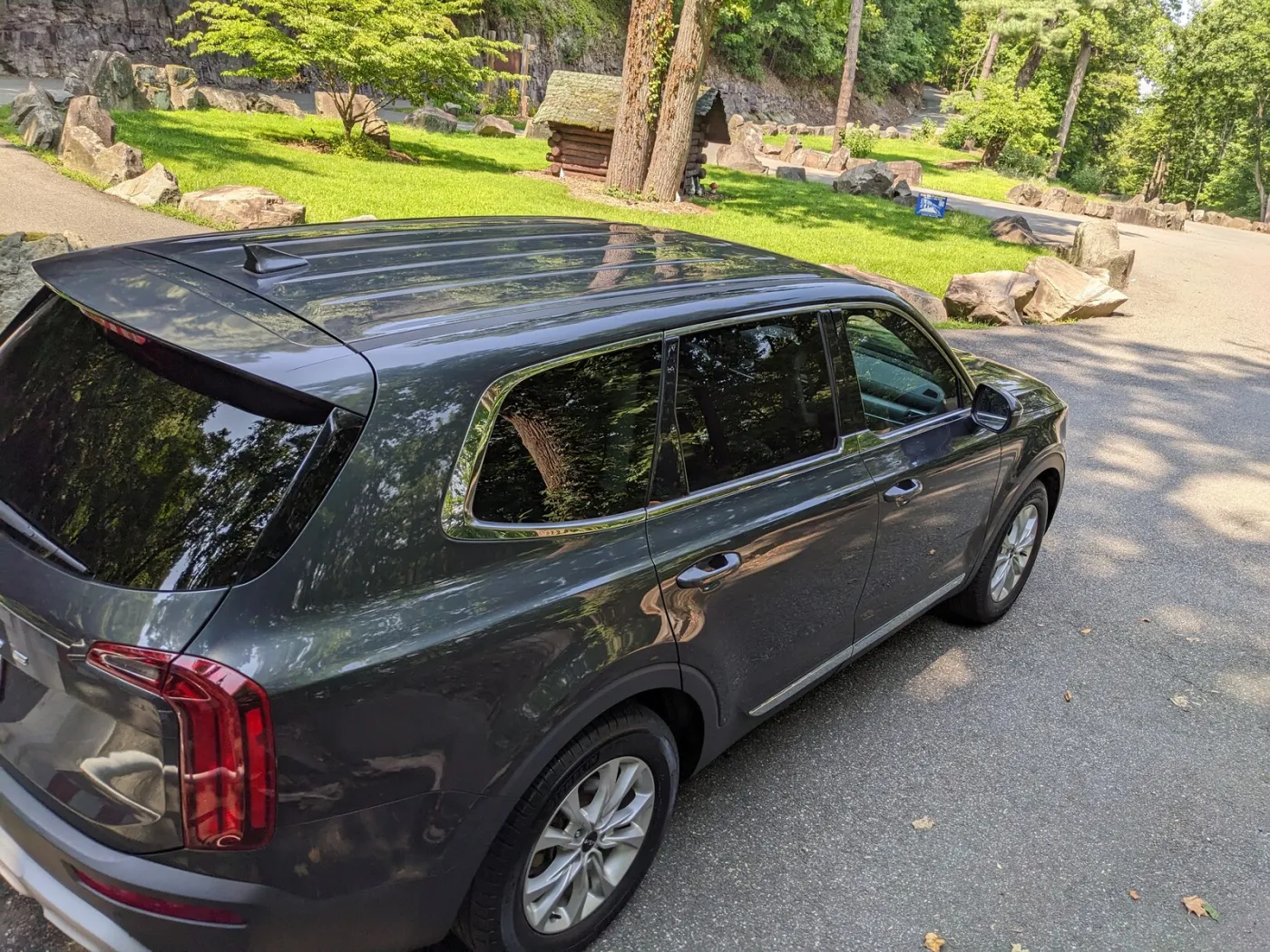
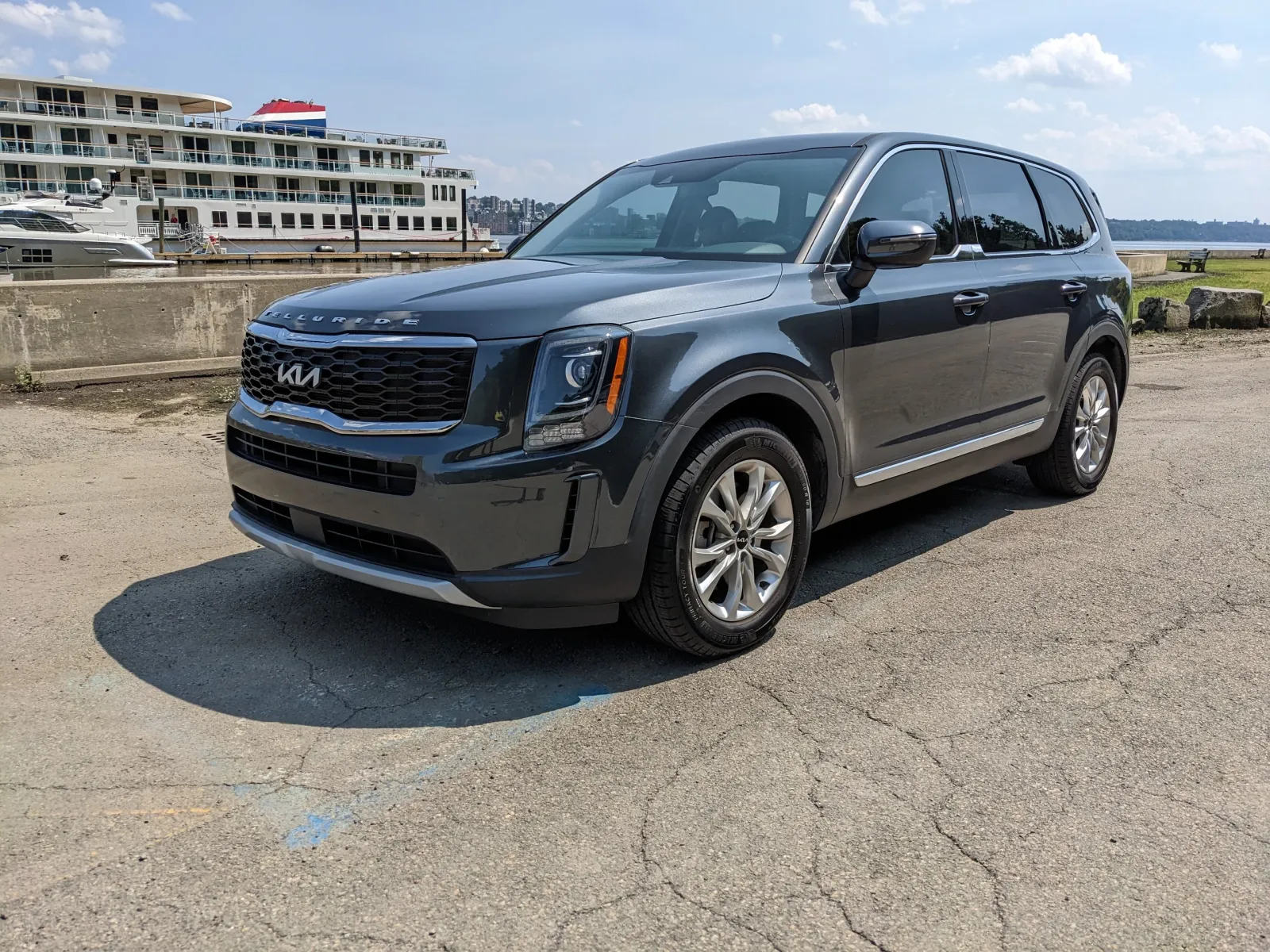
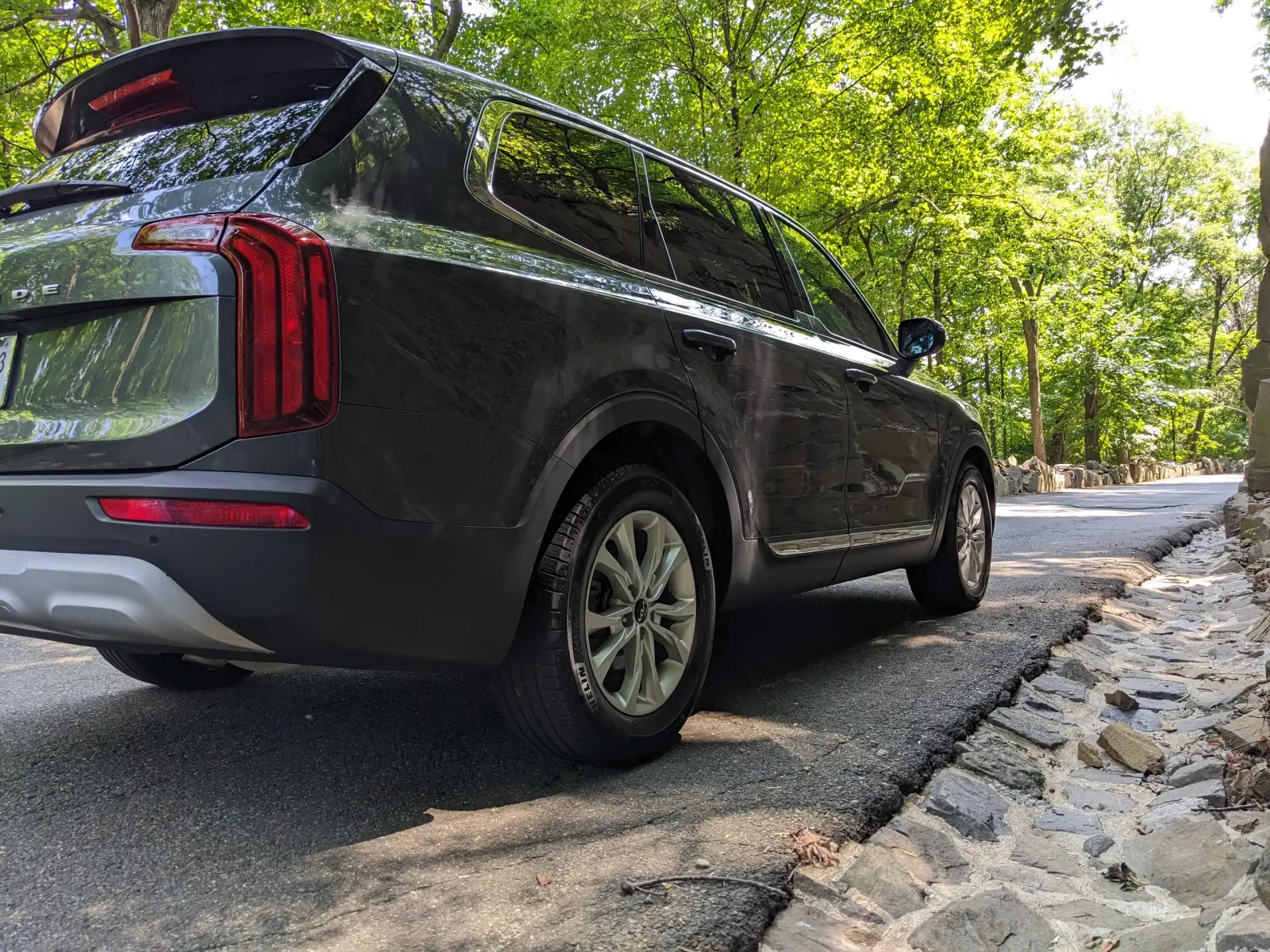
We think a lot of that tension is a packaging problem, not a parenting problem. Cram five to seven people into a vehicle designed for four and a gym bag, and you have engineered a conflict. So we went looking for the antidote, and it just pulled into the fleet: a 2022 Kia Telluride LX AWD, in a deep gravity grey, with three genuine rows of seats and a cargo hold that treats a week of luggage as a warm-up.
What's in this article
- Meet the newest member of the fleet
- Why the third row changes the entire trip
- The cargo math nobody does until it is too late
- What 291 horsepower is actually for
- Eight seats, and why that number matters
- Seven Northeast trips that suit it perfectly
- Packing tips from people who load these for a living
- The tech that keeps the peace
- All-wheel drive, winter, and one honest caveat
- What it is like to actually drive
- The running cost, stated honestly
- What the IIHS says
- Why rent instead of buying one
- The numbers, from Kia and the EPA
- Questions renters actually ask us
- Telluride or something else in our fleet?
- Book it
Meet the Newest Member of the Frosty Flame Fleet
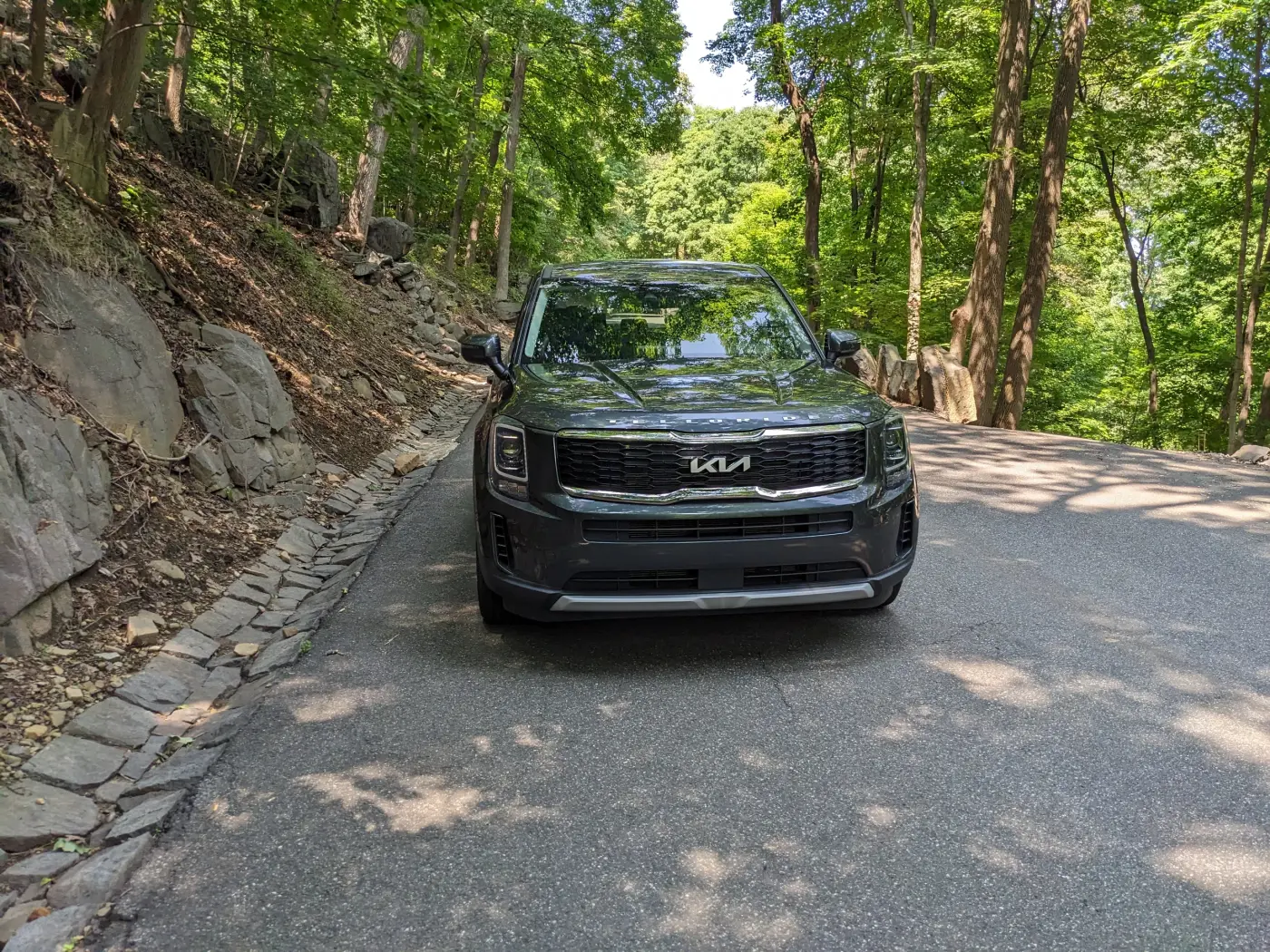
If you have paid any attention to three-row SUVs over the past few years, you already know the Telluride's reputation. It arrived and quietly rearranged the segment — the kind of vehicle that makes shoppers walk out of other showrooms mid-sentence. Ours is the LX with all-wheel drive, which is the trim that proves the point best, because "base model" here still means a genuinely nice place to spend six hours.
Under the hood is a 3.8-liter Lambda-II V6 with gasoline direct injection, making 291 horsepower at 6,000 rpm and 262 lb-ft of torque at 5,200 rpm, paired to an eight-speed automatic. That is not a sports car number, and it is not trying to be. It is a merging-onto-287-with-a-full-load number, which is the one that actually matters when you have eight people and a cooler on board.
The rest of the headline figures: eight seats, 87.0 cubic feet of maximum cargo space, 5,000 pounds of towing capacity, and 8.0 inches of ground clearance. It is 196.9 inches long and 78.3 inches wide on a 114.2-inch wheelbase, which means it is substantial without being the kind of vehicle that requires a three-point turn to leave a Whole Foods parking spot. Curb weight for the all-wheel-drive version runs between 4,255 and 4,354 pounds — heavy enough to feel planted, light enough that the V6 never sounds like it is working.
Why the Third Row Changes the Entire Trip
Here is the part people underestimate. A third row is not just about carrying more humans. It is about separation. It is diplomacy with cupholders.
With three rows, the two people who cannot sit next to each other do not have to sit next to each other. The kid who gets carsick gets the middle row. The teenager who wants to be left alone with headphones gets the back. The grandparent who does not want to climb over anything gets the position by the door. Suddenly nobody is negotiating armrests, because there are enough armrests.
The second-row bench has a one-touch fold-and-slide function, which sounds like a brochure line until you are standing in a parking garage in Boston holding a duffel bag with a seven-year-old already halfway into the back. Then it sounds like a small miracle. Third-row access does not require flexibility training or an apology.
There is a subtler point about noise. Three rows of seats, plus the bodies and bags in them, absorb a remarkable amount of sound. A full Telluride is quieter inside than a half-empty one, and quieter than a smaller vehicle carrying the same people, because everyone is further apart and there is more soft material between them. Six hours of that is a different experience from six hours of everybody shouting over each other in a compact crossover.
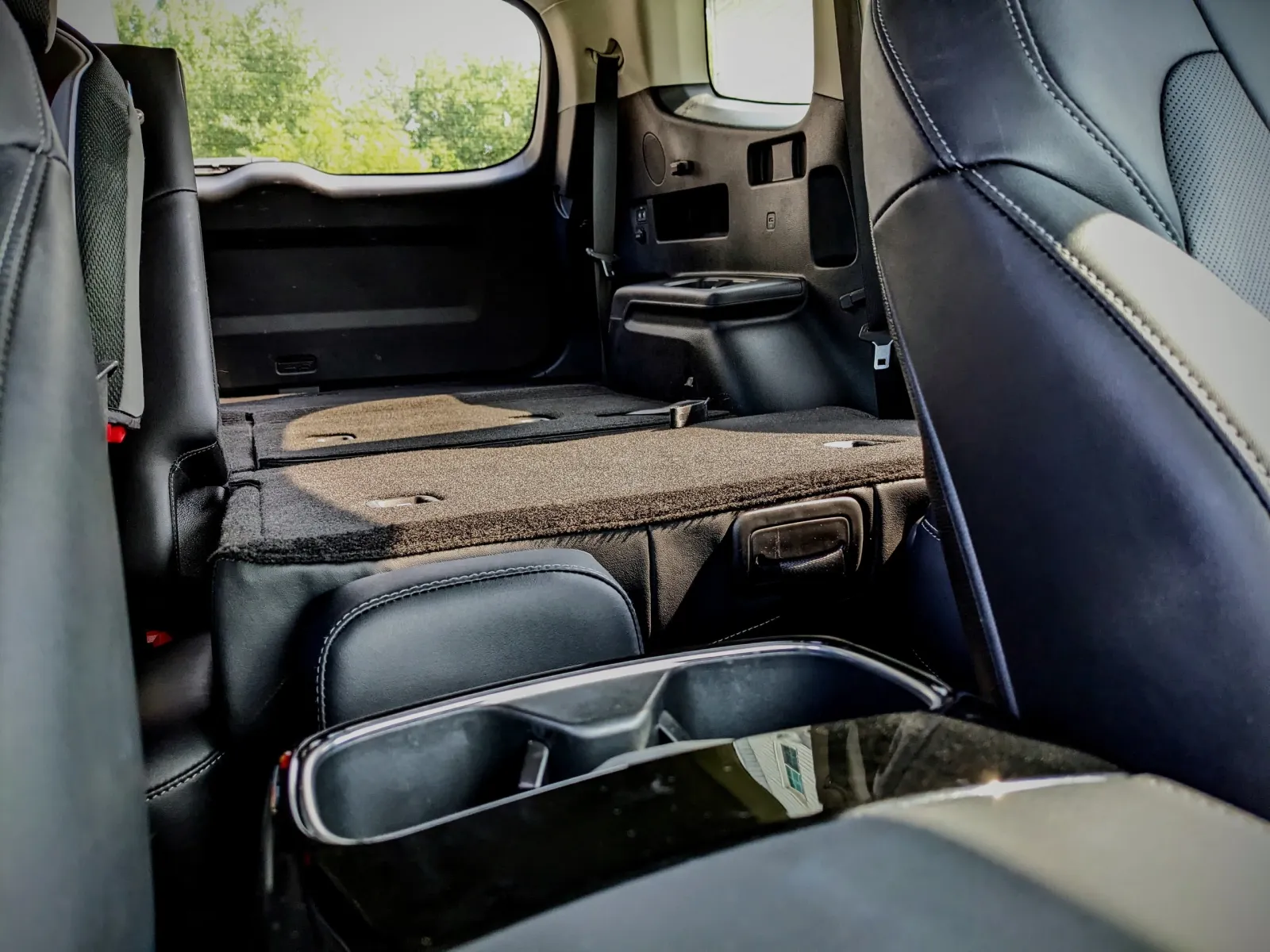
And when the third row is not carrying people, it folds flat and the whole thing becomes a cargo van with better seats. Which brings us to the math.
The Cargo Math Nobody Does Until It's Too Late
Everyone plans the trip. Almost nobody plans the trunk. Then it is 6 a.m. on departure day, the driveway looks like a yard sale, and someone is asking whether the cooler "really" needs to come.
The Telluride's numbers are the reason we like it for this: 21.0 cubic feet behind the third row, 46.0 cubic feet behind the second, and 87.0 cubic feet with everything folded. That first number is the important one. Twenty-one cubic feet behind a full third row means you can carry eight people and their bags at the same time — which sounds obvious, and is exactly what most three-row crossovers cannot actually do. Plenty of them give you a third row or a trunk, and make you choose.
In practical terms, behind a full third row you fit roughly four carry-on-sized suitcases plus a soft cooler, or a week of beach gear for a family of five, or — and we have tested this — an absurd number of grocery bags from a Costco run that got out of hand.
It is worth saying something about the shape of that space too, because cubic feet is a number that can flatter a badly designed load bay. The Telluride's is close to square. The floor is flat with the third row down, the sides are near-vertical, and the tailgate opening is wide and low. That means the quoted volume is largely usable volume rather than awkward slivers around the wheel arches, and it is the difference between packing once and packing twice.
What 291 Horsepower Is Actually For
Modern horsepower figures have become a slightly silly conversation, so it is worth being concrete about what this engine is doing for you.
A naturally aspirated 3.8-liter V6 producing 291 horsepower and 262 lb-ft is not the most modern way to build a family SUV — most of the segment has moved to smaller turbocharged engines. What it is, though, is entirely predictable. Torque arrives in a smooth line rather than a turbocharged step, there is no lag while a turbo spools, and the eight-speed automatic has enough ratios to keep the engine in the right place without hunting. When you are towing, or fully loaded, or climbing a long grade in the Berkshires in August with the air conditioning working hard, predictable is worth considerably more than peak.
The 5,000-pound towing capacity is the headline capability figure and it is a genuinely useful one. That covers a small boat, a pair of jet skis on a double trailer, a utility trailer, or a modest camper. It is the number that turns a family SUV into a vehicle that can also move a project.
The Telluride also has Drive Mode Select, with Comfort, Eco, Sport and Smart settings, and standard Torque Vectoring Cornering Control — which subtly brakes the inside wheel through a corner to help the vehicle turn. On a 4,300-pound three-row SUV you notice that less as excitement and more as the absence of the vague, floaty feeling that used to define the category.
Eight Seats, and Why That Number Matters
The LX comes with eight-passenger seating and a slide-and-fold second-row bench, rather than the seven-seat captain's-chair layout offered further up the range. We rent the eight-seater deliberately, and it is worth explaining the trade-off because it is a real one.
Captain's chairs are more comfortable for the two people sitting in them and create a permanent walk-through aisle to the third row. A bench seats three. For a rental fleet, three beats two almost every time, because the trips where somebody genuinely needs the eighth seat — the extra cousin, the friend joining last-minute, the airport run where four flights land at once — are exactly the trips where no other vehicle will do. A seven-seater that needs to be an eight-seater is useless. An eight-seater carrying six is just an eight-seater carrying six.
Total interior volume is 178.1 cubic feet, which for context is a great deal of air to move around and one of the reasons the cabin does not feel like a compromise in any row.
Seven Northeast Trips That Suit It Perfectly
The Jersey Shore, obviously. Long Beach Island, Ocean City, Cape May — the classic run down the Parkway. Beach chairs, umbrellas, boogie boards, and a wagon all disappear into the back with the third row folded, and you still have room for four passengers in comfort. Leave before 7 a.m. on a Saturday or accept your fate.
Lake George and the Adirondacks. About four and a half hours north, and the payoff is enormous: mountain air, clear water, and a town built entirely around summer. This is the trip where the third row earns its keep, because it is the one where you inevitably end up bringing a cousin.
The Delaware Water Gap. Barely ninety minutes from Bergen County and it feels like a different state entirely. Waterfalls, hiking, and river access, with enough ground clearance for the gravel lots that guard the good trailheads.
Hershey and Lancaster County. A three-hour run into Pennsylvania that works beautifully as a two-night trip. Amusement park one day, farm country the next, and a cargo hold ready for whatever gets purchased at a roadside stand on impulse.
The Poconos or the Catskills for a cabin weekend. Groceries, bedding, a grill's worth of food, and a family that does not want to take two cars. The tow rating means a small trailer or a boat is on the table too, if your version of a cabin weekend involves a lake.
College move-in day. The single most Telluride-shaped errand there is. A dorm room's worth of possessions, two parents, a sibling who did not want to come, and a return trip that is mercifully empty. Fold the third row on the way up, put it back for the drive home.
The multi-family airport run. Unglamorous, and the trip people forget to plan for. Eight seats and 21 cubic feet behind them is the difference between one vehicle and two, and two vehicles to Newark at 5 a.m. is a genuinely miserable way to start a holiday.
Packing Tips From People Who Load These for a Living
We load and unload vehicles constantly, so a few things we have learned the hard way:
Heavy and low, forward of the axle. Coolers and suitcases go on the floor, pushed toward the back of the seats — not stacked up by the tailgate. It keeps the handling neutral and stops the whole load from lunging forward when you brake.
Soft bags beat hard cases. Duffels conform to the shape of the space. Rigid suitcases enforce their own geometry and waste the corners. If you own both, bring the duffels.
Pack a "day bag" last. Whatever you need at a rest stop — snacks, wipes, a phone cable, the one stuffed animal that cannot be lost — goes in a single bag that rides in the cabin, not the cargo hold. Otherwise you will unpack the entire vehicle in a Wawa parking lot. We have watched it happen.
Leave a sightline. Do not stack above the headrests. The rear camera is excellent; the rear window is better. Use both. This is also a safety point rather than a tidiness one — anything stacked above the seatback becomes a projectile in a hard stop.
Load the third row before the second. If you are carrying eight people, the bags behind row three go in first, then everyone gets in. Trying to reach past a fully occupied third row to arrange luggage is a job nobody enjoys and everybody has attempted once.
Count the cupholders and use them. Sounds facetious; is not. Loose drinks are the leading cause of upholstery incidents on a long drive, and the leading cause of a driver turning around at 70 miles an hour.
The Tech That Keeps the Peace
The 10.25-inch display is standard on the 2022 LX and runs navigation, Apple CarPlay and Android Auto, SiriusXM and Bluetooth, so navigation and the family playlist come straight off a phone without anyone learning a new interface at 70 mph. Audio is a six-speaker system including two tweeters — not an audiophile setup, and perfectly good for a car in which the primary audio content is a negotiation about lunch.
There is dual-zone automatic climate control up front and rear automatic temperature control, which resolves roughly forty percent of all in-car arguments before they begin — the driver and the third row genuinely do not have to agree on temperature anymore. USB charging keeps devices alive, which is not a luxury on a five-hour drive; it is infrastructure.
The driver-assistance story on this car is better than its base-trim status suggests, and it is worth listing properly because it is the reason a long haul is less exhausting in it. Standard on the 2022 LX: Highway Driving Assist, Smart Cruise Control with Stop & Go, Forward Collision-Avoidance Assist with pedestrian and cyclist detection, Forward Collision Warning, Lane Keeping Assist, Lane Following Assist, Lane Departure Warning, Blind-Spot Collision-Avoidance Assist-Rear, Rear Cross-Traffic Collision-Avoidance Assist, Navigation-based Smart Cruise Control-Curve, Driver Attention Warning, Parking Distance Warning-Reverse, and a rear-view monitor with dynamic parking guidance.
Adaptive cruise that handles stop-and-go traffic is the one to focus on. On the Turnpike on a Friday in July, it is the difference between arriving tired and arriving wrecked.
All-Wheel Drive, Winter, and One Honest Caveat
Ours is the all-wheel-drive Telluride, running Kia's Active On-Demand All-Wheel Drive. In normal conditions it sends drive primarily to the front wheels for efficiency and moves torque rearward when it detects slip, which is the sensible arrangement for a family vehicle that spends most of its life on dry pavement.
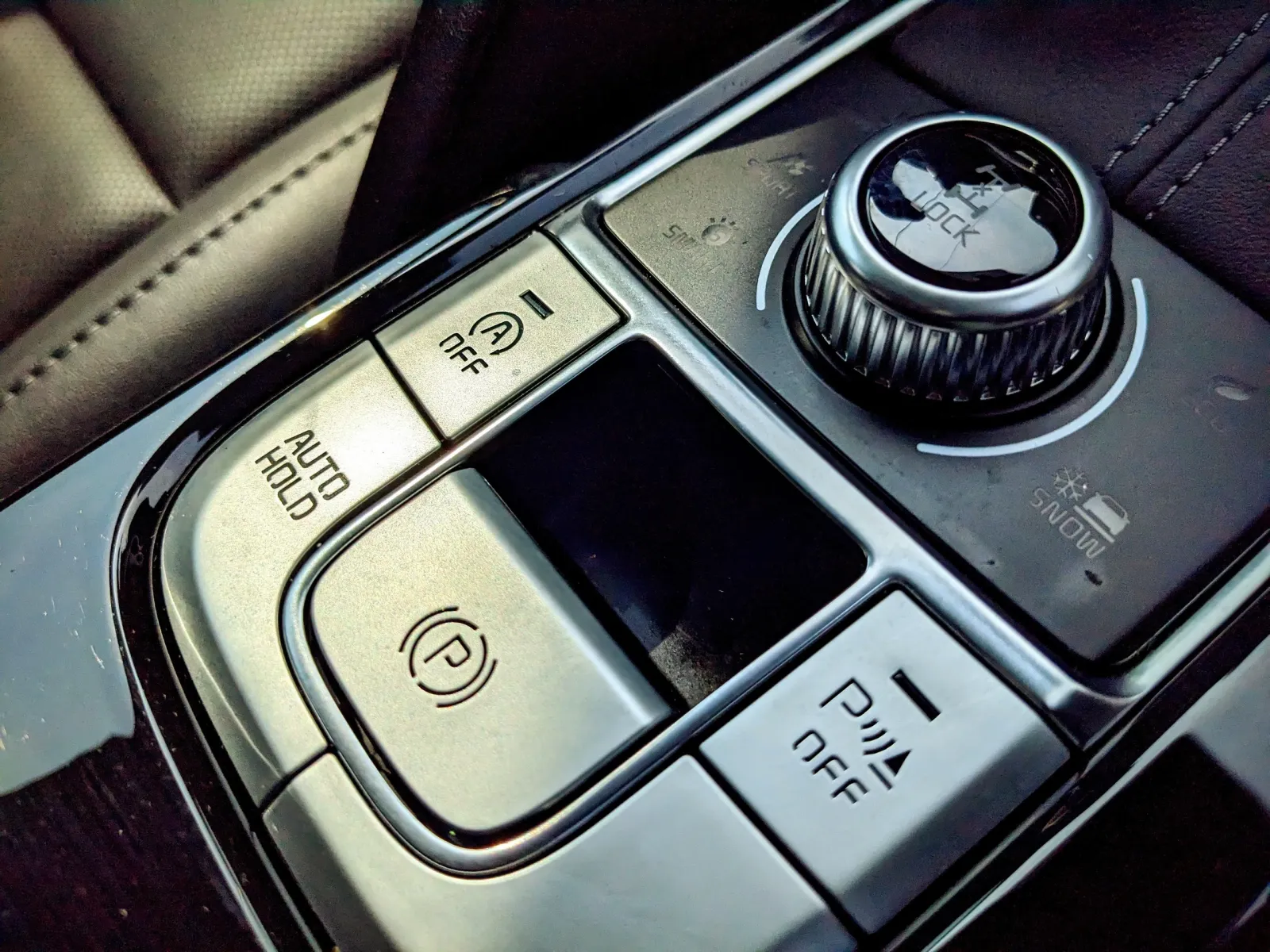
Here is the honest caveat, and we are including it because we would rather be accurate than flattering. On the 2022 Telluride, the dedicated AWD Lock and Snow drive modes were an option on the LX trim rather than standard equipment. Plenty of write-ups about the Telluride, including an earlier version of this article, describe Snow mode as though every all-wheel-drive car has it. On this model year and trim, that is not automatically true.
What is unambiguously true is that the vehicle has all-wheel drive, 8.0 inches of ground clearance, stability and traction control, and the full Drive Wise assistance suite. That combination handles a New Jersey winter perfectly well. If your trip specifically depends on a locking mode — an unploughed mountain road, a steep gravel drive in deep snow — ask us before you book and we will confirm exactly what this individual vehicle is equipped with rather than guessing on your behalf.
And the point that outranks all of it: tyres matter more than drivetrain. Every winter, all-wheel-drive vehicles on worn all-season tyres end up in ditches beside front-wheel-drive cars on proper winter rubber that got home fine. All-wheel drive helps you accelerate. It does very little to help you stop or steer, which are the two things that actually go wrong.
What It Is Like to Actually Drive
Specifications tell you what a vehicle can do. They are quite bad at telling you what it is like, so here is the subjective part.
The dominant impression is calm. The Telluride does not feel fast, does not feel sporty, and is not trying to. It feels big, planted and unbothered, in a way that is genuinely restful over a long distance. The steering is light and accurate rather than communicative. The ride absorbs New Jersey road surfaces — which is a real engineering achievement and not a compliment we hand out casually. The V6 is smooth and largely inaudible until you ask something of it, at which point it makes a decent noise and gets on with it.
What surprises most people who step out of a smaller car is how little the size costs you day to day. At 196.9 inches it is a long vehicle, but the visibility is excellent — the greenhouse is tall, the pillars are relatively slim, and the seating position is high enough to see over ordinary traffic. Combined with the reversing camera and parking sensors, it is far less intimidating in a parking structure than the dimensions suggest. We have handed it to people who were visibly nervous about the size and watched them park it fine on the first attempt.
The thing that ages well over six hours is the seat and the noise floor. Kia fitted this generation with genuinely good front seats and enough sound insulation that conversation between the first and third rows is possible without raised voices. That is the actual product on a family road trip. Everything else on the specification sheet is in service of it.
The Running Cost, Stated Honestly
We run electric vehicles alongside this one, so we are not going to pretend the Telluride is cheap to fuel. The EPA rates the 2022 Telluride all-wheel drive at 19 mpg city, 24 highway, 21 combined.
That is entirely respectable for a 4,300-pound eight-seat V6 SUV, and it is a real cost. On a 400-mile weekend you are buying roughly nineteen gallons of gasoline. Our Tesla Model 3 would do the same distance for something close to pocket change, and our Kia EV9 — which is a comparably sized three-row SUV — would do it for a fraction too.
So why do we run it, and why would you rent it? Because fuel is not the only cost that matters, and for certain trips the Telluride wins on the ones that do. It seats eight rather than six. It refuels completely in four minutes at any of the tens of thousands of gas stations between here and anywhere. It requires no planning, no app, no charging stop, and no thought whatsoever about where you are going or how cold it is.
For a long interstate haul into unfamiliar territory with a full load of people, that simplicity is worth more than the fuel saving. For a weekend at the shore with four people, it probably is not, and we will tell you so. We would rather put you in the right vehicle than the expensive one.
What the IIHS Says
The 2022 Kia Telluride earned a Top Safety Pick award from the Insurance Institute for Highway Safety when equipped with specific headlights.
That headlight qualifier is not us hedging — it is how the award actually works, and it is the detail most articles drop. IIHS awards are frequently conditional on which headlight system a particular trim carries, because headlight performance varies enormously across trims of the same vehicle and the Institute rates them separately. We would rather give you the award with its condition attached than a cleaner sentence that is slightly untrue.
If crash performance is a deciding factor for your trip, look the rating up yourself on the IIHS site. It takes a minute, it is free, and it is the single most useful piece of independent information available about any vehicle you are about to put your family in.
Why Rent Instead of Buying One
Here is our honest pitch. If you need a three-row SUV every single day, buy one. If you need a three-row SUV four or five times a year — the shore week, the college drop-off, the holidays, the airport run when everyone's flight lands at once — then buying one means paying for a big vehicle three hundred days a year to solve a problem that exists on sixty.
Work the arithmetic on the days you do not use it. A large SUV depreciates whether or not it leaves the driveway. It is insured every day of the year. It is registered, maintained, and taking up space every day of the year. And it costs more to fuel on every single ordinary errand than the smaller car you would otherwise have driven — 21 mpg applies to the trip to the supermarket too.
Rent the big vehicle for the big trip. Drive your normal car the rest of the time. The math is not close, and you get a clean, freshly detailed SUV with current tires and no mystery smell under the third row.
The Numbers, From Kia and the EPA
| Engine | 3.8L Lambda-II V6, gasoline direct injection, DOHC with dual CVVT |
|---|---|
| Power & torque | 291 hp @ 6,000 rpm; 262 lb-ft @ 5,200 rpm |
| Transmission | Eight-speed automatic with torque converter |
| Drive | Active On-Demand All-Wheel Drive |
| EPA fuel economy | 19 city / 24 highway / 21 combined mpg |
| Seating | Eight, with slide-and-fold second row |
| Cargo volume | 21.0 cu ft behind row 3 / 46.0 behind row 2 / 87.0 maximum |
| Total interior volume | 178.1 cu ft |
| Towing | 5,000 lbs |
| Ground clearance | 8.0 inches |
| Dimensions | 196.9 in long / 78.3 in wide / 69.3 in high with roof rails / 114.2 in wheelbase |
| Curb weight (AWD) | 4,255–4,354 lbs |
| Display & audio | 10.25-inch display with navigation, Apple CarPlay and Android Auto; six speakers |
| IIHS | Top Safety Pick (2022, with specific headlights) |
Questions Renters Actually Ask Us
Will eight people and their luggage really fit at the same time? Yes, and this is the question we get most. Twenty-one cubic feet behind a raised third row is the figure that makes it true. For eight people on a week-long trip with full-size suitcases it will be tight, and a roof box would help. For eight people on a weekend, it is comfortable.
Are there car seat anchors in the third row? Ask us and we will confirm the exact configuration on this vehicle before you book rather than describing a generic layout. If you are travelling with multiple car seats, tell us how many and how old the children are, and we will tell you honestly whether this is the right vehicle.
Is it hard to park? Less than you would expect. See the driving section above. Visibility is good and the camera and sensors are standard.
Can I tow with it? It is rated to 5,000 pounds, but towing requires the correct hitch and wiring and we need to know in advance. Ask before you book — do not assume, and do not turn up with a trailer.
Does it have Snow mode? Read the all-wheel-drive section above. It has all-wheel drive; the dedicated Snow and AWD Lock modes were optional on this model year and trim, so we will confirm what this specific car has rather than guess.
What fuel does it take? Regular gasoline. There is no premium requirement, which on a 19-gallon-a-weekend vehicle is worth knowing.
Can you deliver it? Yes, across North Jersey, including Newark, LaGuardia and JFK. For the multi-family airport run this is usually the whole reason people call us.
Telluride or Something Else in Our Fleet?
Versus our 2024 Kia EV9. The closest comparison we run, and the choice comes down to two things. The Telluride seats eight to the EV9's six, carries slightly more maximum cargo at 87.0 cubic feet against 81.7, and refuels anywhere in four minutes. The EV9 costs a fraction as much to run, is quicker, and has a 1,920-watt power outlet that can run a campsite. Both tow 5,000 pounds. Big group or a long haul into unfamiliar territory: Telluride. Everything else, and especially camping: EV9.
Versus our 2026 Tesla Model Y. Five seats against eight, and an EPA-rated 327 miles of very cheap running against a four-minute fill-up. If your group fits in five seats, the Model Y is the better and cheaper vehicle. If it does not, this is not a real decision.
Versus our 2023 Tesla Model 3. Different vehicles for different jobs entirely. The Model 3 is the cheapest way to cover miles with a small group. The Telluride is the vehicle you rent when the number of people is the constraint.
Book It
The Telluride is live in our fleet now, based here in Bergen County and available for shore runs, mountain weekends, airport pickups, college move-in day, and every family logistics puzzle in between. Rent direct from us,'re protected, with 24/7 roadside assistance. We deliver across North Jersey.
Bring the whole crew. There is finally room.
Reserve the Kia Telluride
Eight seats, 87 cubic feet, and 5,000 pounds of towing. Book direct with us.
Book Direct With UsFollow the Adventure on Instagram
New arrivals, road-trip shots, and behind-the-scenes detailing chaos all land on our feed first. Tag us in your trip photos and we'll share our favorites.
Follow @frostyflame_llcReady for a Trip With Room to Spare?
Reserve the Telluride or browse the rest of the fleet for your next Northeast adventure.
View Our Fleet
Written by Frankie
Frankie is Chief Editor & Marketing Director for Frosty Flame Vehicle Rentals.
#nyc #newjersey #nj #VisitNJ #ExploreNJ #NJSpots #ILoveNY #UpstateNY #ExploreNY


Permalink: frostyflame.llc/blog/telluride-family-road-trips.html